This post may contain affiliate links. Read the full disclosure here.
There’s something absolutely magical about a pergola draped in beautiful climbing plants! As a mom of three energetic boys, I’ve learned that creating a gorgeous outdoor space doesn’t just make our backyard look amazing—it actually gives us a peaceful retreat where we can all relax together (and sometimes hide from the chaos inside!). A pergola with climbing plants transforms an ordinary garden into a living, breathing work of art that changes with the seasons.
Whether you’re dreaming of a cozy reading nook surrounded by fragrant flowers or a shaded play area where the kids can cool off during summer, the right combination of structure and greenery can make it happen! The beauty of combining a pergola with climbing plants is that you get both instant architectural interest and the promise of ever-evolving natural beauty. Plus, watching those vines grow and bloom is such a rewarding experience—kind of like watching your kids grow, but with way less laundry!
Classic Climbing Roses for Romantic Elegance
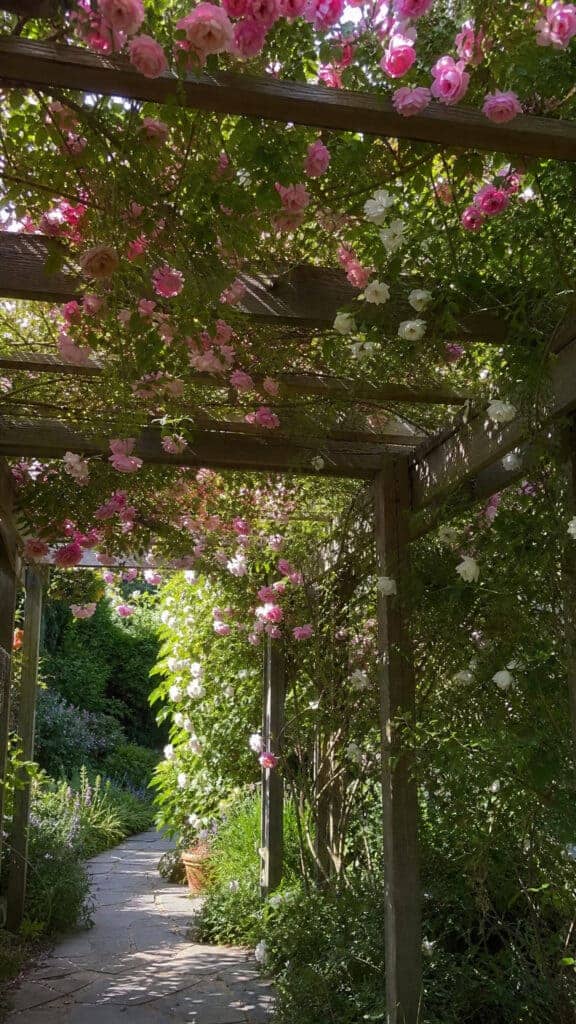

Nothing says timeless garden beauty quite like climbing roses gracefully winding their way up pergola posts! I absolutely adore roses because they bring such incredible color and fragrance to our outdoor space. The boys love picking petals for their nature collections (yes, we have many jars of dried petals around here!), and I love how the blooms create natural privacy screens during the growing season.
When choosing climbing roses for your pergola with climbing plants design, look for varieties that are disease-resistant and suited to your climate zone. Some of my favorites include ‘New Dawn’ with its pale pink blooms, ‘Cecile Brunner’ for smaller spaces, and the stunning ‘Eden’ rose with its old-fashioned cupped flowers. These beauties can reach 10-15 feet, making them perfect for covering even tall pergola structures!
Care tips that actually work:
- Train roses horizontally along pergola beams to encourage more blooms—vertical growth produces fewer flowers!
- Prune in late winter or early spring before new growth appears
- Water deeply at the base rather than overhead to prevent fungal diseases
- Feed with rose-specific fertilizer monthly during growing season
- Watch for aphids (those little boys of mine are surprisingly good at spotting bugs!)
The investment in climbing roses pays off year after year as they mature into stunning focal points. Just imagine sipping your morning coffee under a canopy of fragrant blooms while the kids play nearby—it’s absolutely worth the effort!
Fast-Growing Wisteria for Dramatic Impact
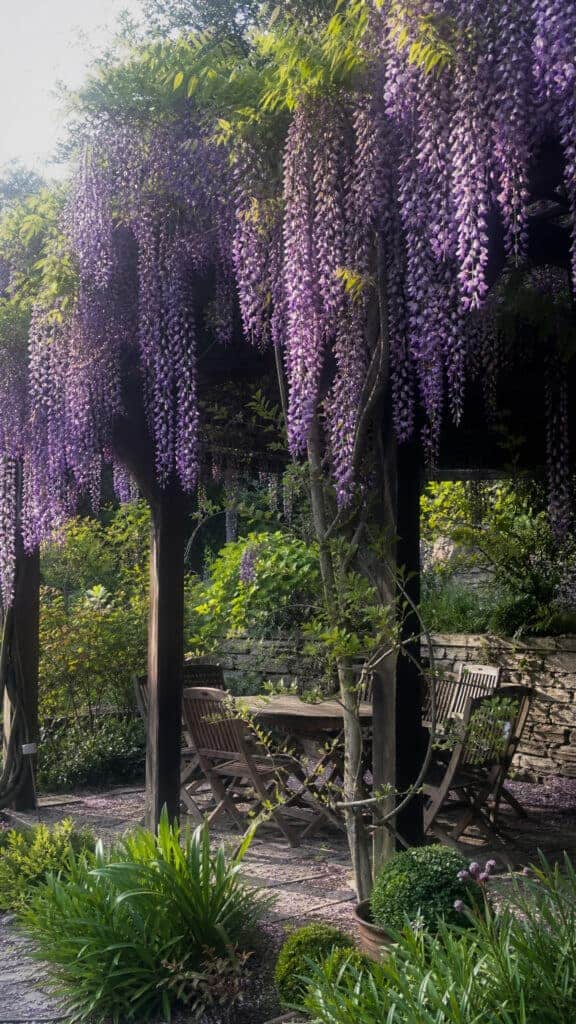
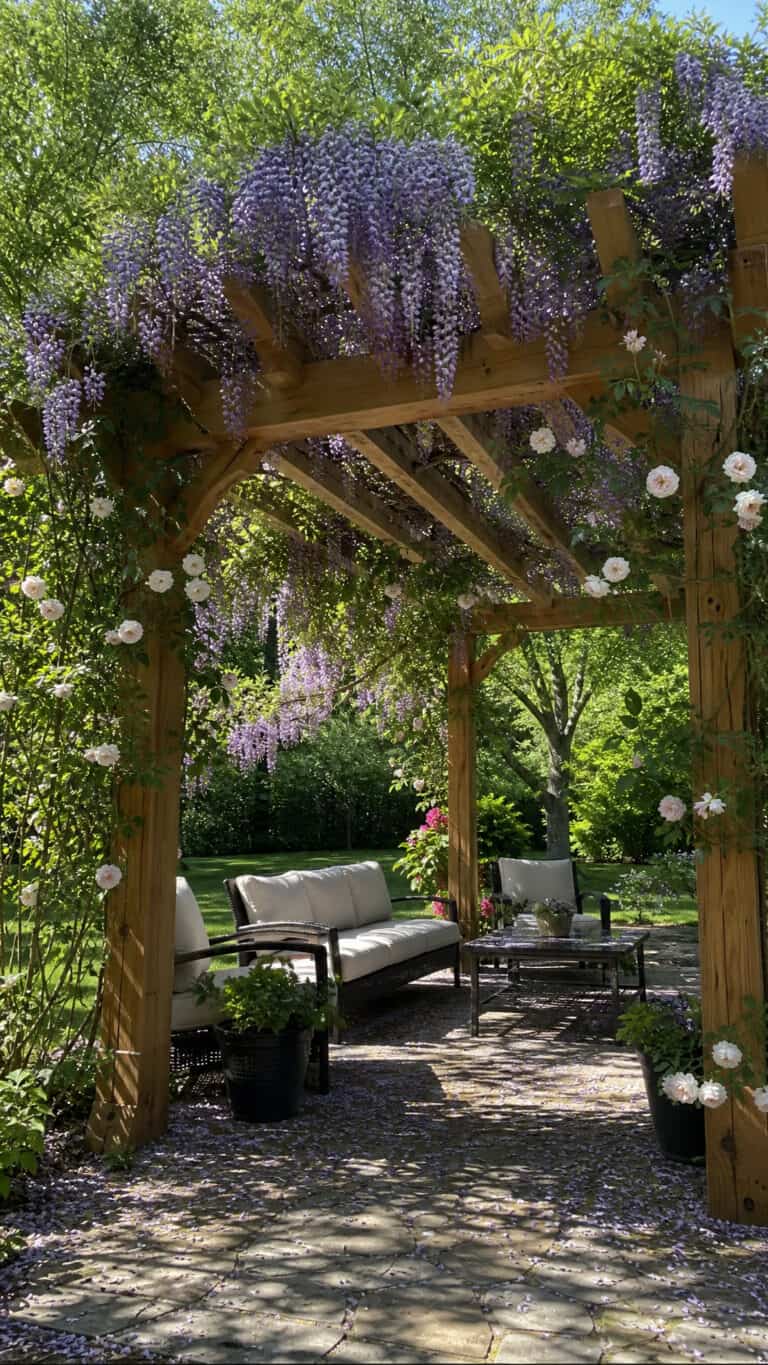
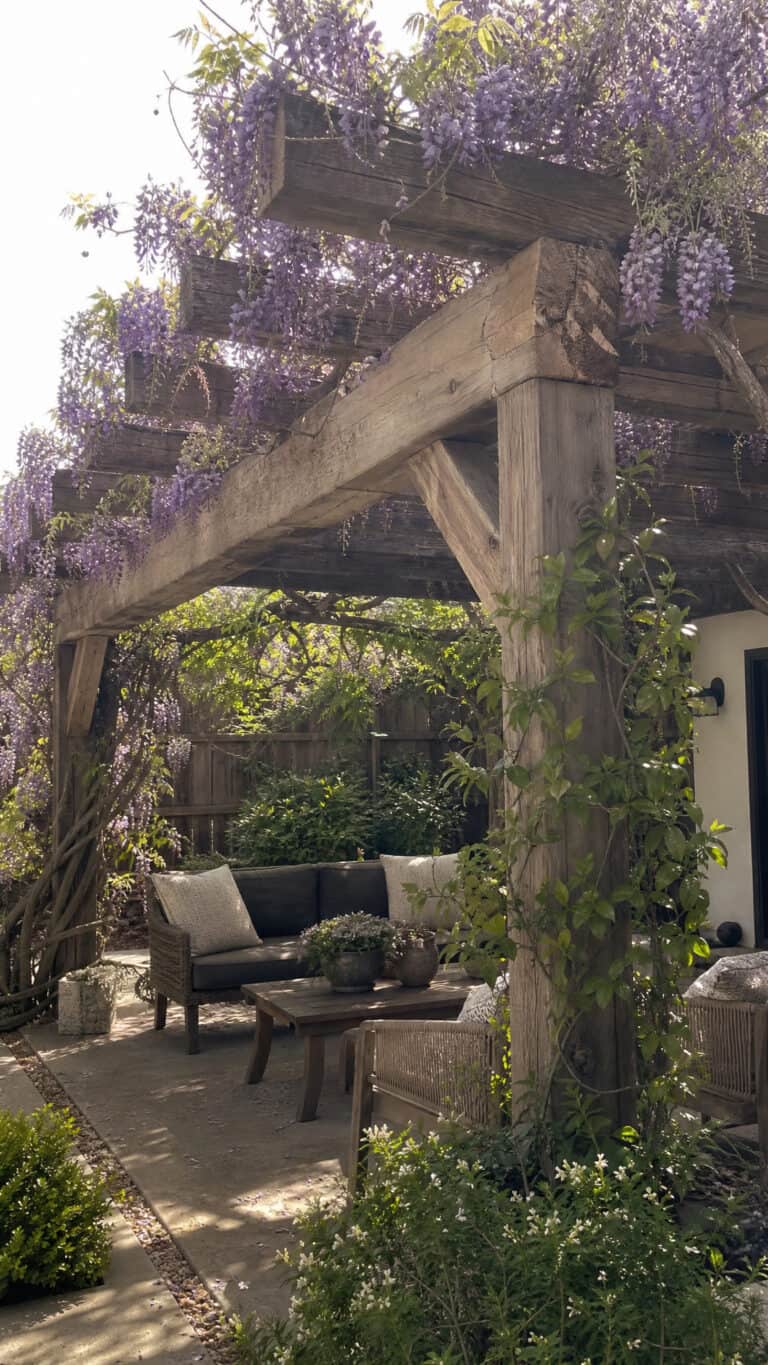
If you want drama and you want it relatively quickly, wisteria is your answer! This vigorous climber creates the most breathtaking cascading flowers that look like something straight out of a fairytale. When our wisteria blooms each spring, even my rough-and-tumble boys stop to admire it—and trust me, that’s saying something!
Wisteria comes in gorgeous shades of purple, blue, white, and even pink. The fragrance is heavenly, and the way those flower clusters hang down from the pergola beams creates an enchanting canopy effect. Just be prepared—wisteria is a strong grower and needs regular pruning to keep it under control. Think of it as the energetic toddler of the climbing plant world!
Important considerations for wisteria:
- Choose between Chinese wisteria (twines counterclockwise) or Japanese wisteria (twines clockwise)
- Ensure your pergola structure is sturdy—wisteria gets heavy as it matures!
- It may take 3-5 years before you see blooms, so patience is key
- Prune twice yearly: once in summer and once in winter
- Plant grafted varieties for more reliable blooming
The wait for those first blooms is totally worth it! Once established, a pergola with climbing plants like wisteria becomes the showstopper of your entire garden. Just make sure you’re committed to the maintenance—this beauty needs attention to stay gorgeous and not take over your entire yard!
Fragrant Jasmine for Evening Relaxation
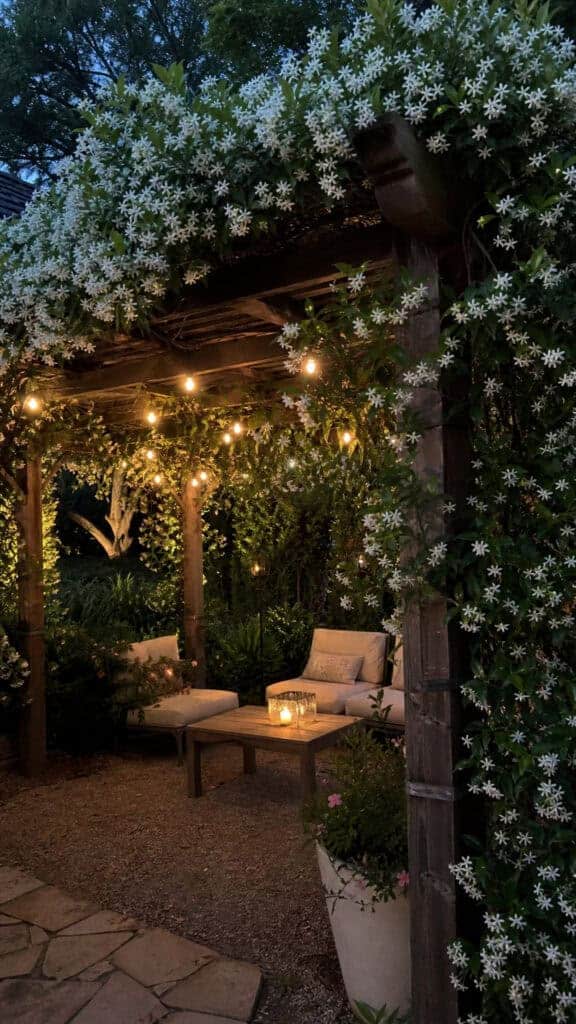
After finally getting three boys to bed, there’s nothing I love more than stepping outside to a jasmine-covered pergola! The evening fragrance is absolutely intoxicating and creates the most relaxing atmosphere. Jasmine is one of those pergola with climbing plants combinations that engages multiple senses—beautiful to look at and amazing to smell.
Star jasmine (Trachelospermum jasminoides) is my top recommendation because it’s relatively easy to grow and incredibly fragrant. The small, star-shaped white flowers appear in late spring and early summer, covering the entire plant in a blanket of blooms. It’s also evergreen in warmer climates, which means year-round coverage and privacy!
Why jasmine works wonderfully:
- Tolerates partial shade, making it versatile for different pergola locations
- Evergreen foliage provides year-round interest and coverage
- Attracts beneficial pollinators like bees and butterflies
- Relatively low-maintenance once established
- Can be trained easily along wires or directly onto pergola beams
- Grows moderately fast without becoming invasive
For those cooler climate zones, consider summer jasmine (Jasminum officinale) which is more cold-hardy. The fragrance is similar, though the plant is deciduous. Either way, incorporating jasmine into your pergola design creates a sensory experience that transforms your backyard into a personal spa retreat!
Clematis Varieties for Year-Round Color
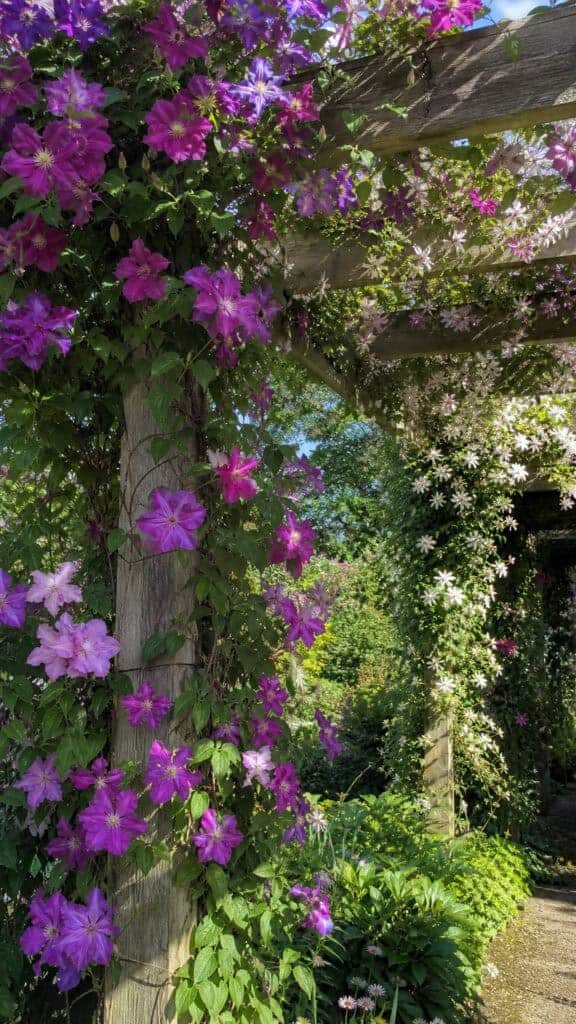
Clematis is like the Swiss Army knife of climbing plants—there’s a variety for every season, color preference, and growing condition! I love mixing different clematis varieties on our pergola because it means we get blooms from spring all the way through fall. The boys think it’s cool how the flowers come in so many different shapes and sizes!
The secret to clematis success is understanding the three pruning groups, but honestly, once you get the hang of it, these plants are incredibly rewarding. From the dinner-plate-sized blooms of ‘Henryi’ to the delicate nodding flowers of ‘Princess Diana’, there’s a clematis for every style and taste.
Top clematis varieties for pergolas:
- Early bloomers: ‘Montana’ varieties for spring coverage with masses of small flowers
- Large-flowered hybrids: ‘Nelly Moser’ with distinctive pink stripes, ‘Jackmanii’ in deep purple
- Late bloomers: Sweet autumn clematis for fall fragrance and coverage
- Evergreen options: Clematis armandii for year-round foliage in mild climates
Here’s my favorite trick: plant clematis with their roots in shade and their flowers in sun. I mulch heavily around the base and let companion plants shade the root zone. The classic saying is “head in the sun, feet in the shade,” and it really works! A pergola with climbing plants like clematis creates layers of interest and color that keep your garden exciting all season long.
Edible Options: Grape Vines and Kiwi
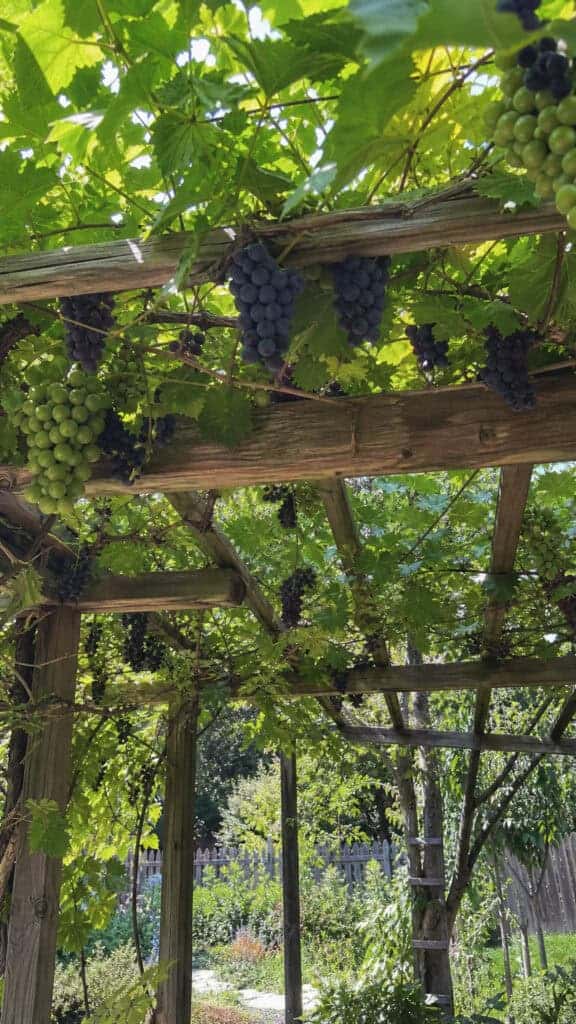
Why not make your pergola both beautiful AND productive? Growing edible climbing plants is such a fun way to teach kids about where food comes from—plus, my boys love snacking on grapes straight from the vine! Grape vines and hardy kiwi are excellent choices that provide shade, beauty, and delicious fruit all in one package.
Grape vines are traditional pergola plants for a reason—they’ve been used this way for thousands of years! The large leaves create wonderful dappled shade during hot summer months, the fall color is spectacular, and of course, there’s the harvest to look forward to. Hardy kiwi (not the fuzzy kind from the store) is another fantastic option that’s more cold-tolerant and produces smooth-skinned, grape-sized fruits.
Benefits of edible climbing plants:
- Dual purpose: ornamental beauty plus fresh fruit for your family
- Excellent shade creation with large leaves
- Teaches children about gardening and food production
- Beautiful fall foliage before leaves drop
- Can be trained into attractive patterns along pergola structure
- Relatively pest-resistant compared to some ornamentals
Growing tips for success:
- Choose disease-resistant grape varieties suited to your region
- Ensure good air circulation to prevent fungal issues
- Prune grapes in late winter when fully dormant
- Hardy kiwi needs both male and female plants for fruit production
- Provide sturdy support—mature fruit-bearing vines are heavy!
There’s something so satisfying about sitting under your pergola with climbing plants, reaching up, and picking fresh fruit! It makes the whole space feel even more special and purposeful.
Low-Maintenance Honeysuckle for Busy Families
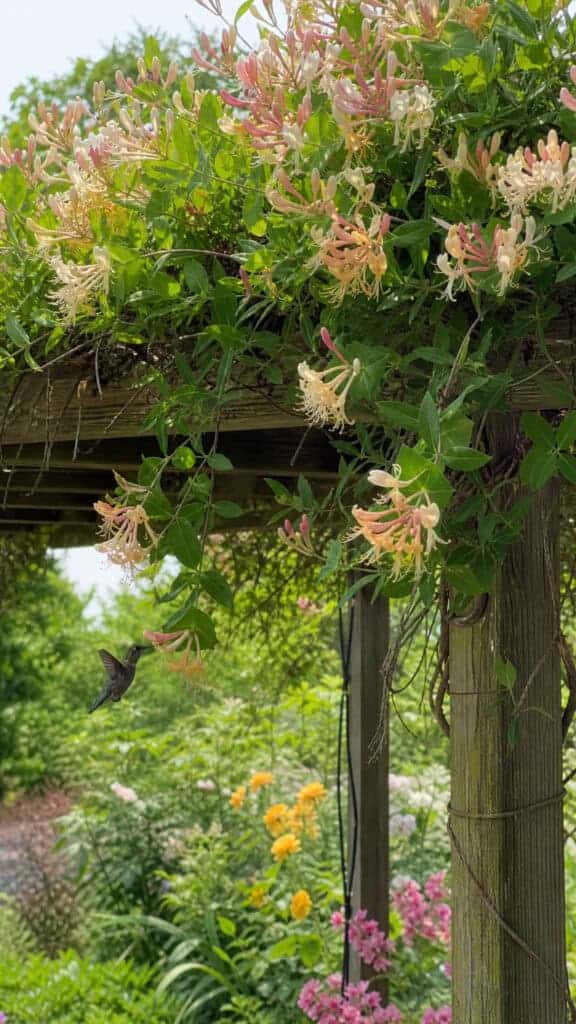
Let’s be real—with three boys keeping me on my toes, I need plants that can basically take care of themselves! Honeysuckle is one of those wonderfully forgiving climbers that looks gorgeous, smells amazing, and doesn’t require constant attention. It’s perfect for busy moms who want a beautiful pergola with climbing plants but don’t have hours to spend on garden maintenance.
The tubular flowers are magnets for hummingbirds and butterflies, which the kids absolutely love watching! We’ve had some amazing nature moments under our honeysuckle-covered pergola. The sweet fragrance fills the air on summer evenings, and the vigorous growth means you get that lush, established look relatively quickly.
Best honeysuckle varieties:
- Lonicera periclymenum ‘Serotina’: Beautiful burgundy and cream flowers, less invasive than Japanese honeysuckle
- Trumpet honeysuckle (Lonicera sempervirens): Native option with red-orange flowers, beloved by hummingbirds
- Goldflame honeysuckle: Pink and yellow blooms that age to a peachy color
- Major Wheeler: Bright red flowers all summer long, compact growth
Why honeysuckle works for busy families:
- Tolerates various soil conditions and some neglect
- Fast-growing for quick coverage and privacy
- Blooms prolifically without deadheading
- Attracts wildlife for educational opportunities
- Fragrant flowers create a sensory garden experience
- Can handle both full sun and partial shade
Just avoid the invasive Japanese honeysuckle and stick with the well-behaved cultivars. Your pergola will be covered in sweet-smelling blooms without demanding all your precious free time!
Creating Your Perfect Pergola Plant Combination
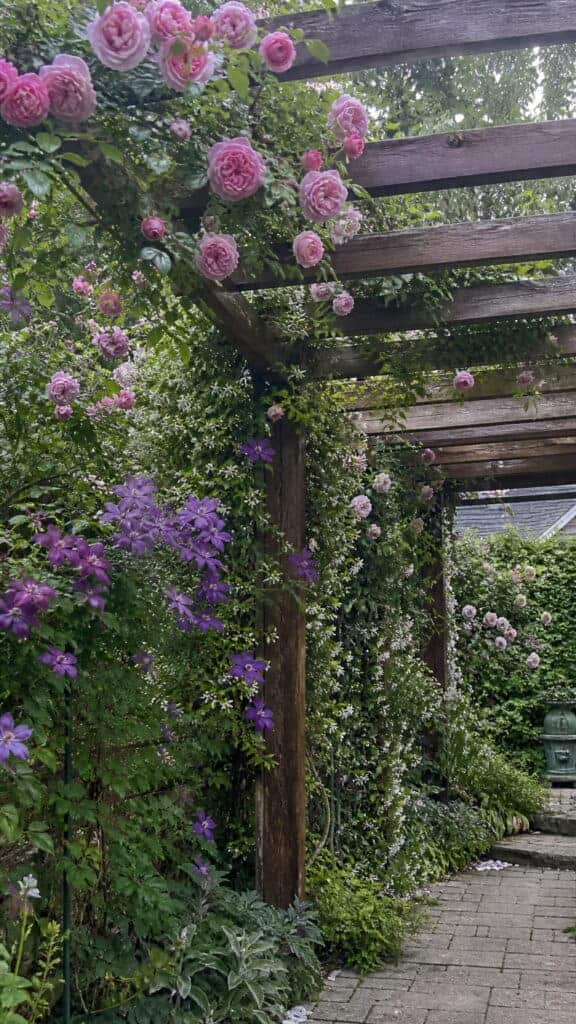
Here’s where the real magic happens—combining different climbing plants for a pergola that’s uniquely yours! I’ve learned through trial and error (okay, mostly error!) that mixing plants with different bloom times, textures, and heights creates the most interesting and longest-lasting display. It’s like decorating a room, but with living, growing elements!
The key is thinking about what you want from your space throughout the entire year. Do you want spring blooms? Summer shade? Fall color? Evergreen coverage? A pergola with climbing plants can deliver all of these if you plan your combinations thoughtfully. Plus, layering different plants adds depth and visual interest that a single variety just can’t achieve.
Successful combination strategies:
- Bloom succession: Pair early-blooming clematis with late-season climbing roses for months of flowers
- Texture contrast: Combine delicate jasmine with bold wisteria foliage
- Color harmony: Plant purple clematis with white roses for a classic, elegant look
- Fragrance layering: Mix honeysuckle and jasmine for incredible evening scents
- Evergreen base: Use star jasmine as year-round coverage, add deciduous bloomers for seasonal interest
Practical planting tips:
- Space plants at least 3-4 feet apart to prevent overcrowding
- Plant vigorous growers (like wisteria) on their own posts to prevent them from smothering companions
- Consider mature size—don’t overplant or you’ll be constantly pruning
- Group plants with similar water and sun requirements
- Install support wires or trellises before plants get too large
My current favorite combination is climbing roses on the sunny side, clematis weaving through the middle, and jasmine providing evergreen coverage on the shadier posts. It gives us something beautiful to look at year-round, and the maintenance is actually manageable between baseball practices and homework help!
Bringing Your Pergola with Climbing Plants Vision to Life
Creating a lush garden look with a pergola and climbing plants is one of the most rewarding projects you can tackle! Whether you start with one simple vine or go all-out with multiple varieties, you’re creating a living space that will bring joy to your family for years to come. The beauty of this project is that it evolves and improves with time—unlike most things in a house with three boys!
Start with your favorites, give them the care they need to establish, and then watch the magic happen! Before you know it, you’ll have that dreamy, lush outdoor retreat you’ve been picturing. Trust me, there’s nothing quite like enjoying a quiet moment (or a chaotic family dinner!) under a canopy of beautiful climbing plants. Your pergola will become the heart of your outdoor space and the backdrop for countless family memories!