This post may contain affiliate links. Read the full disclosure here.
Living with a sloped yard can feel like such a challenge, especially when you’re trying to create a beautiful outdoor space while also keeping three energetic boys from tumbling down the hill! I’ve spent countless hours figuring out how to make our sloped yard both gorgeous and functional, and retaining walls with flower beds have been absolute game-changers for our family.
These retaining wall flower bed ideas aren’t just about holding back soil—they’re about creating stunning focal points, adding dimension to your landscape, and giving you actual usable space for planting those flowers you’ve been dreaming about! Whether you’re dealing with a gentle slope or a dramatic hillside, there’s a solution here that’ll work perfectly for your yard.
Tiered Stone Wall Garden
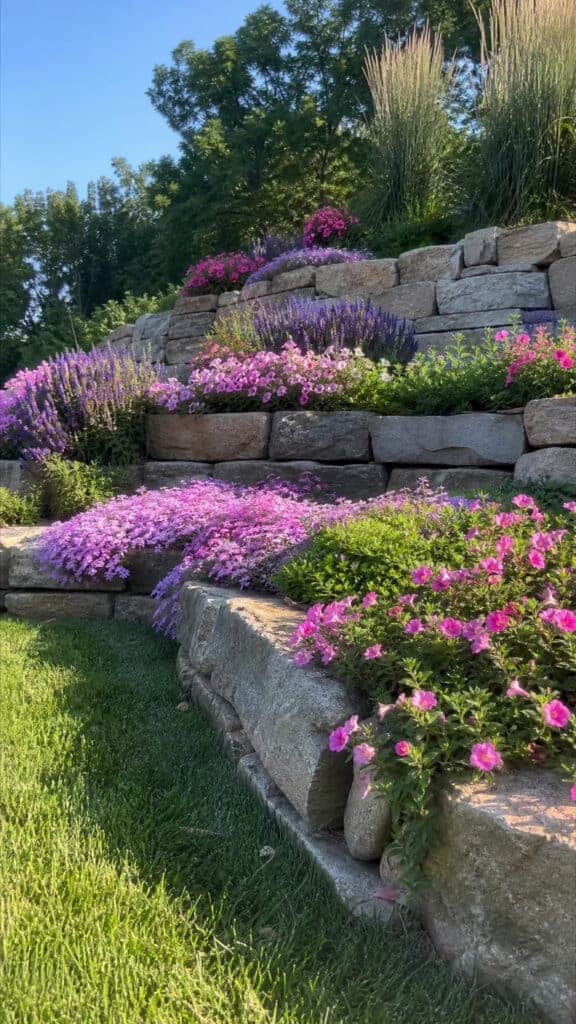

A tiered stone wall garden is absolutely one of my favorite retaining wall flower bed ideas because it creates such a dramatic, castle-like effect in your yard! This design uses multiple levels of stacked stone walls, each creating its own individual flower bed at different heights. It’s like having several mini-gardens stacked on top of each other, and it makes such a statement!
The beauty of this approach is that you can plant different flowers at each level, creating a cascading rainbow effect that’s just breathtaking. I love planting taller perennials at the top level and letting smaller, trailing plants spill over the edges of each tier. The boys think it looks like a fairy castle, and honestly, they’re not wrong!
When building tiered walls, make sure each level is set back slightly from the one below it. This not only provides better stability but also prevents water from pooling and gives your plants better drainage. Natural stone works beautifully for this design, though you can also use concrete blocks that look like stone if you’re on a budget.
Best plants for tiered stone walls:
- Creeping phlox for gorgeous cascading color
- Sedum varieties that drape beautifully over edges
- Lavender for height and amazing fragrance
- Petunias for continuous summer blooms
- Ornamental grasses at the top tier for movement
Raised Timber Bed with Overflow Planting
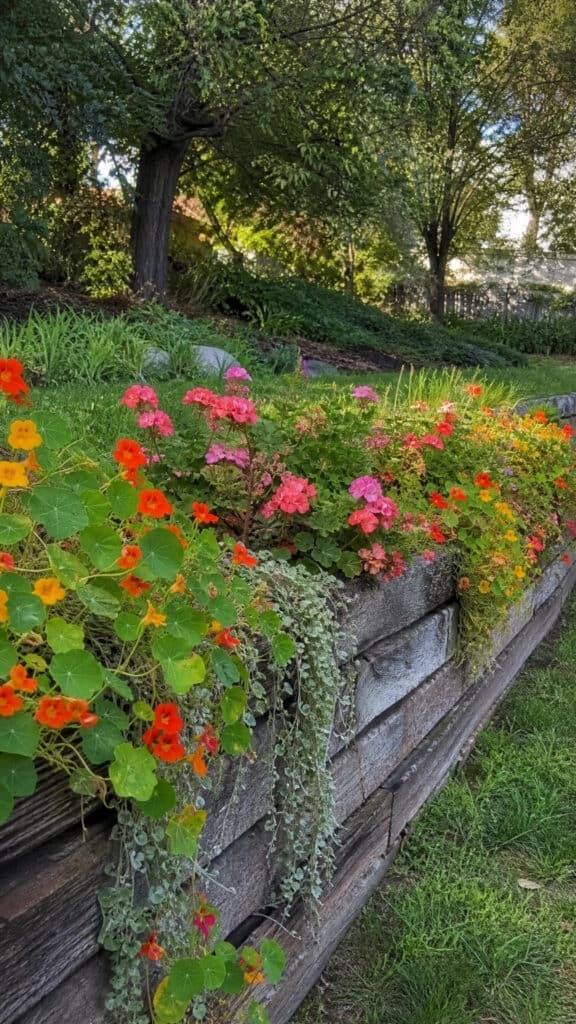
Timber retaining walls give such a warm, natural look to your landscape, and they’re perfect for creating raised flower beds that really pop! I absolutely love using thick railway ties or landscape timbers to build sturdy walls that can handle our clay soil and provide plenty of depth for root growth. The rustic look blends so beautifully with any garden style!
What makes this one of my go-to retaining wall flower bed ideas is how you can let plants overflow the top and spill down the front of the timber wall. This softens the hard edges and creates that cottage-garden look I’m always trying to achieve. Plus, timber is relatively easy to work with—even for those of us who aren’t master carpenters!
The key to success with timber walls is proper installation. You’ll want to anchor them securely into the slope, use landscape fabric behind the wall to prevent soil erosion, and ensure good drainage with gravel backfill. Trust me, taking these extra steps now will save you from having to rebuild later!
I’ve found that timber walls work especially well for vegetable gardens too, so if you want to mix some tomatoes in with your flowers (like I do!), this is a fantastic option. The boys love helping me harvest cherry tomatoes from our timber-walled beds!
Perfect plants for timber retaining walls:
- Nasturtiums that trail beautifully over wood
- Geraniums for bold color blocks
- Hostas in shadier spots
- Black-eyed Susans for cheerful yellow blooms
- Herbs like thyme and oregano that cascade nicely
Curved Boulder Wall with Alpine Plants
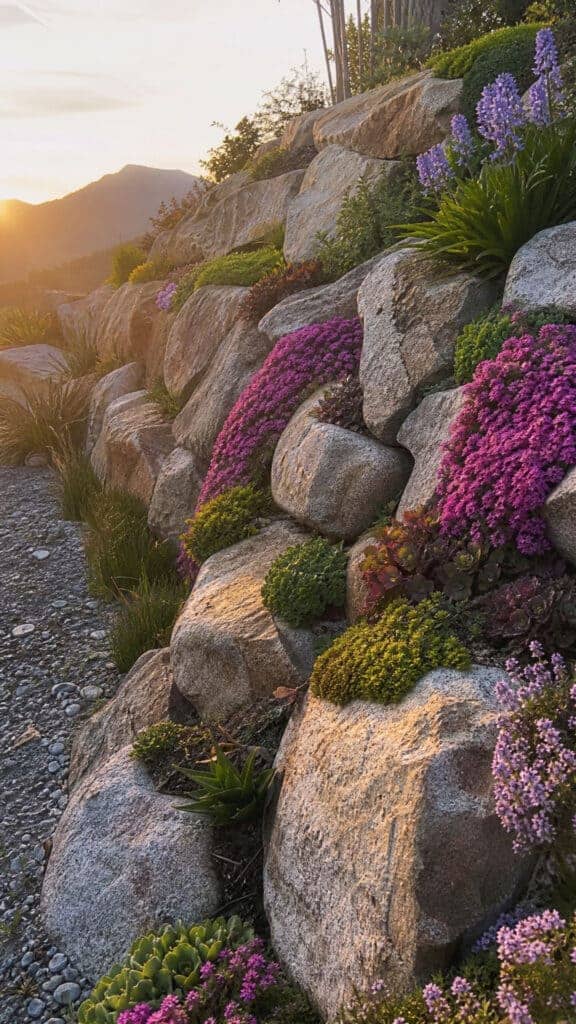
Using large boulders to create a curved retaining wall is one of those retaining wall flower bed ideas that looks like it was designed by a professional landscaper, but it’s actually quite doable! The natural, organic curves soften the landscape and create such a beautiful flow that straight walls just can’t achieve. Plus, boulders are incredibly durable—they’ll outlast all of us!
I love how boulder walls create pockets and crevices that are perfect for tucking in alpine plants and rock garden favorites. These little nooks provide excellent drainage and create microclimates that certain plants absolutely thrive in. It’s like creating a mini-mountain ecosystem right in your own backyard!
The trick with boulder walls is planning your curve before you start placing rocks. I actually laid out a garden hose on the ground to visualize the curve I wanted, then worked from there. Larger boulders go at the base for stability, with smaller rocks filling in gaps and creating those perfect planting pockets.
This design works especially well if you have a naturally rocky property or if you can source boulders locally. The irregular shapes and natural colors blend seamlessly with the landscape, making it look like the rocks have always been there. My middle son loves climbing on the boulders (supervised, of course!), so it’s become a functional play feature too!
Ideal plants for boulder walls:
- Hens and chicks (sempervivum) for drought tolerance
- Creeping thyme that fills cracks beautifully
- Dianthus for pops of pink and white
- Ice plant for dramatic color coverage
- Moss phlox that hugs the rocks perfectly
Brick Wall with Formal Flower Beds
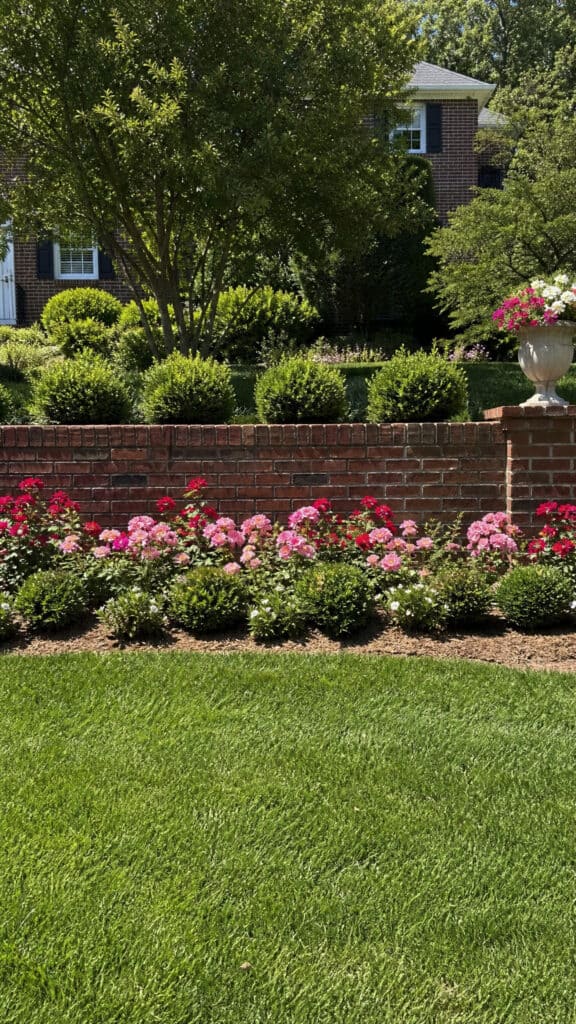
If you’re going for a more traditional or formal look, brick retaining walls with structured flower beds are absolutely stunning! This is one of those retaining wall flower bed ideas that adds instant elegance and really increases your home’s curb appeal. The uniform look of brick creates clean lines that make your plantings really stand out.
I’ll admit, brick walls require more precision during installation than some other options, but the finished result is so worth it! The classic red brick look never goes out of style, though you can also find bricks in various colors to match your home’s exterior. The formal structure of brick lends itself beautifully to symmetrical planting designs.
One thing I absolutely love about brick retaining walls is how well they work with both traditional and modern landscaping styles. You can go formal with boxwoods and roses, or mix it up with a cottage garden explosion of color. The brick provides the structure while your plants provide the personality!
For proper drainage, make sure to include weep holes in your brick wall—these are small gaps that allow water to escape and prevent pressure buildup behind the wall. This is especially important in areas with heavy rainfall or freeze-thaw cycles. Taking care of these details ensures your beautiful wall will last for decades!
Beautiful plants for brick retaining walls:
- Roses for classic elegance
- Boxwood for formal structure
- Salvia for vertical interest and color
- Daylilies for reliable blooms
- Dusty miller for silvery foliage contrast
Gabion Wall with Modern Plantings
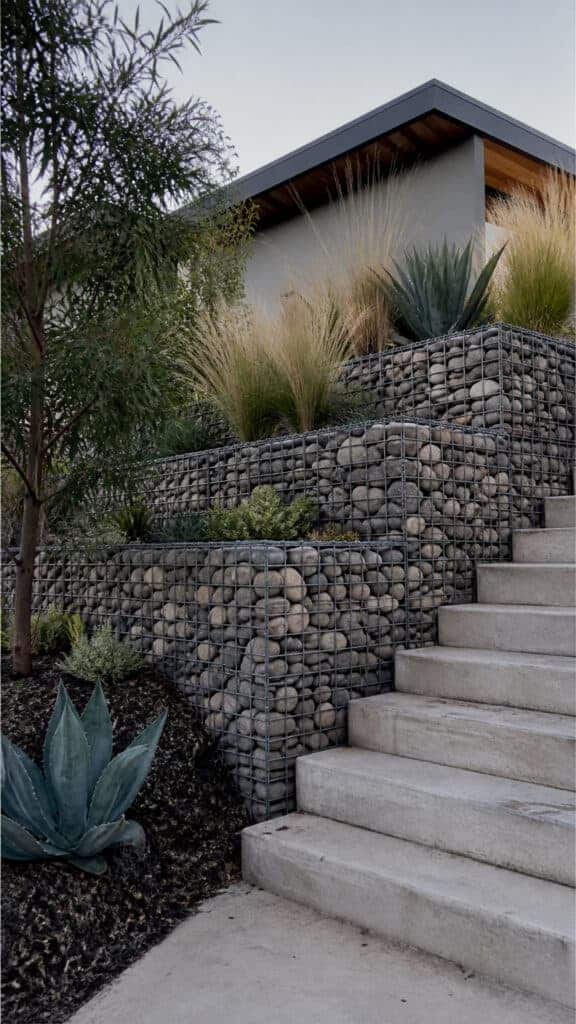
Gabion walls are one of the more contemporary retaining wall flower bed ideas, and they create such an interesting industrial-chic look! These walls are made from wire cages filled with rocks or stones, and they’ve become super popular in modern landscape design. I love how they provide excellent drainage while creating a unique textural element!
What’s really cool about gabion walls is that you can fill them with different materials to create various looks—smooth river rocks for a softer appearance, or angular crushed stone for more drama. The wire cages come in different sizes, so you can customize the look to fit your specific slope and style preferences.
Installing gabion walls is actually pretty straightforward, which is great for DIY enthusiasts like me! The cages stack together, you fill them with your chosen rock, and they create a super stable wall that handles water drainage beautifully. No mortar needed, which means less mess and easier installation!
I like to plant ornamental grasses and architectural plants near gabion walls to emphasize that modern aesthetic. The contrast between the structured wire cages and the flowing, organic plants creates such visual interest. Plus, the boys think the rock-filled cages look like something from a video game, so that’s a win!
Modern plants for gabion walls:
- Ornamental grasses like fountain grass or blue fescue
- Agave and yucca for bold architectural forms
- Russian sage for airy purple blooms
- Black mondo grass for dramatic contrast
- Coreopsis for bright yellow pops of color
Stacked Concrete Block Garden
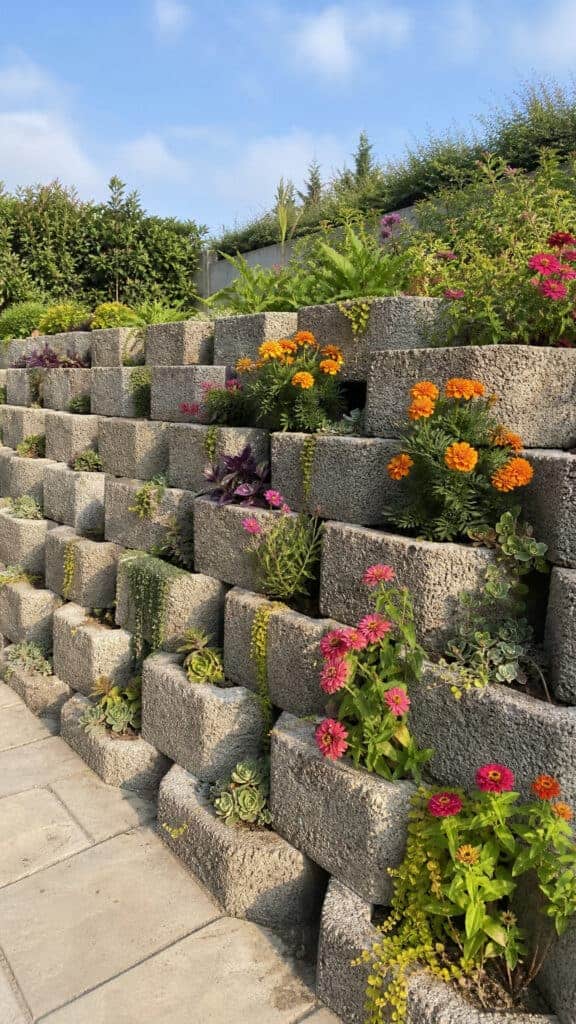
Concrete block retaining walls are one of the most budget-friendly retaining wall flower bed ideas, and they’re incredibly versatile! Modern concrete blocks come in so many styles now—from smooth contemporary looks to textured blocks that mimic natural stone. This is definitely the option I recommend to friends who want great results without breaking the bank!
What I really appreciate about concrete blocks is how easy they are to work with. They’re uniform in size, which makes building straight walls much simpler than working with irregular natural stone. Many blocks are designed to interlock, which adds stability without requiring mortar for shorter walls.
The hollow cores of concrete blocks also create perfect planting pockets! You can fill these holes with soil and tuck in small trailing plants or succulents for added visual interest. This technique creates a living wall effect that’s absolutely gorgeous and makes efficient use of every bit of space.
For taller walls or steeper slopes, you’ll want to use concrete adhesive between layers and possibly add reinforcement, but for walls under three feet, the blocks’ weight and interlocking design usually provide plenty of stability. Always check your local building codes though—some areas have specific requirements for retaining walls!
Great plants for concrete block walls:
- Marigolds for cheerful orange and yellow blooms
- Zinnias for easy-care summer color
- Alyssum for sweet fragrance and ground cover
- Succulents in the block holes for living wall effect
- Impatiens for shady slope areas
Dry Stack Stone Wall with Perennial Garden
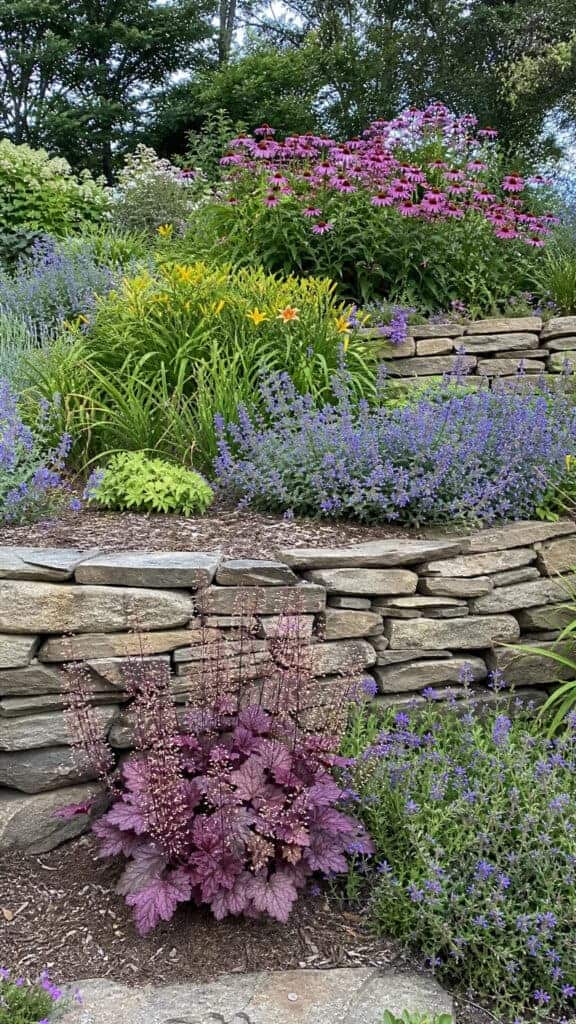
Dry stack stone walls are one of those timeless retaining wall flower bed ideas that have been used for centuries—and for good reason! This technique involves carefully stacking flat stones without mortar, creating a beautiful, natural-looking wall that allows for excellent drainage. It’s like creating a work of art that’s also totally functional!
I absolutely love the organic, old-world charm that dry stack walls bring to a landscape. Each stone is unique, and fitting them together is like solving a three-dimensional puzzle. Yes, it takes patience (and I definitely took breaks to referee boy squabbles!), but the end result is so satisfying and incredibly sturdy when done correctly.
The gaps between stones in a dry stack wall create perfect little homes for small plants and allow water to drain through naturally. This prevents the pressure buildup that can cause mortared walls to fail. Plus, beneficial insects and small creatures find homes in these crevices, which is great for your garden ecosystem!
When building a dry stack wall, choose stones with at least one flat side and try to use larger, heavier stones at the base. Tilt each stone slightly backward into the slope for stability. It’s definitely more labor-intensive than some other options, but the natural beauty and longevity make it totally worthwhile!
Perfect perennials for dry stack walls:
- Catmint for purple blooms and silvery foliage
- Coral bells for colorful foliage variety
- Daylilies in multiple colors for season-long interest
- Coneflowers for height and pollinator attraction
- Lamb’s ear for soft, touchable texture
Railroad Tie Terraced Beds
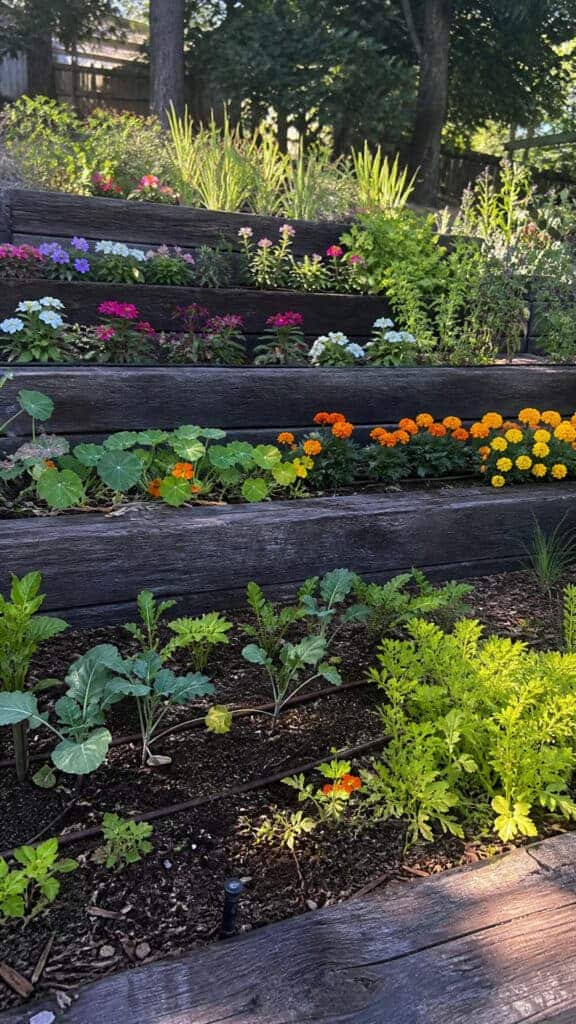
Railroad tie terraced beds are one of my absolute favorite retaining wall flower bed ideas for creating multiple usable planting areas on a steep slope! This design uses thick, heavy railroad ties to create a series of level terraces that step up the hillside. It’s like building garden stairs, and it makes previously unusable slope space totally functional!
The substantial size of railroad ties means they can hold back significant amounts of soil, making them perfect for creating deeper planting beds. I love how each terrace becomes its own little garden room with its own personality. You can dedicate different levels to different types of plants—maybe herbs on one level, flowers on another, and even a small vegetable patch on a third!
Installing railroad tie terraces does require some muscle (I definitely recruited help for this project!), but the ties’ weight works in your favor once they’re in place. You’ll want to drill holes and use long spikes or rebar to anchor the ties together and into the slope for maximum stability.
One important note: if you’re growing edibles, make sure to use untreated timbers or new railroad ties that haven’t been treated with creosote. For flower beds, either type works fine, but for vegetables and herbs, you want to avoid any potential chemical leaching into your soil. Safety first, especially when feeding the family!
Versatile plants for terraced beds:
- Tomatoes and peppers on sunny terraces
- Strawberries for edible ground cover
- Herbs like basil, rosemary, and sage
- Sunflowers for dramatic height
- Mixed lettuce and greens on partially shaded levels
Transform Your Slope into Something Special
Creating beautiful retaining wall flower beds in your sloped yard doesn’t have to be overwhelming! Whether you choose the rustic charm of timber walls, the formal elegance of brick, or the natural beauty of stacked stone, each of these retaining wall flower bed ideas offers a unique way to transform your challenging slope into a stunning garden feature. The key is choosing a style that matches your home’s aesthetic and your personal gardening style!
I promise you, once you tackle that slope and create these gorgeous terraced gardens, you’ll wonder why you didn’t do it sooner! Not only will you gain usable planting space and improve drainage, but you’ll also create visual interest that makes your entire yard more beautiful. Now if you’ll excuse me, I need to go stop my youngest from using our retaining wall as a racetrack for his toy trucks—some things never change!