This post may contain affiliate links. Read the full disclosure here.
There’s something absolutely magical about hydrangeas that makes my heart skip a beat every time I walk past them in the garden! As a mom of three energetic boys who are constantly running through the yard, I’ve learned that creating a beautiful hydrangea flower bed isn’t just about aesthetics—it’s about designing a space that can withstand the occasional soccer ball while still looking absolutely gorgeous. These stunning blooms have become my go-to for adding serious wow-factor to our outdoor space!
Whether you’re dreaming of soft pastels or bold jewel tones, hydrangeas offer endless possibilities for creating a show-stopping garden display. I’ve spent years experimenting with different arrangements (and learning from plenty of mistakes along the way!), and I’m so excited to share all my favorite hydrangea flower bed ideas that will transform your garden into a colorful paradise. Trust me, once you see how versatile and forgiving these beauties are, you’ll be just as obsessed as I am!
Classic Color-Blocked Hydrangea Flower Bed
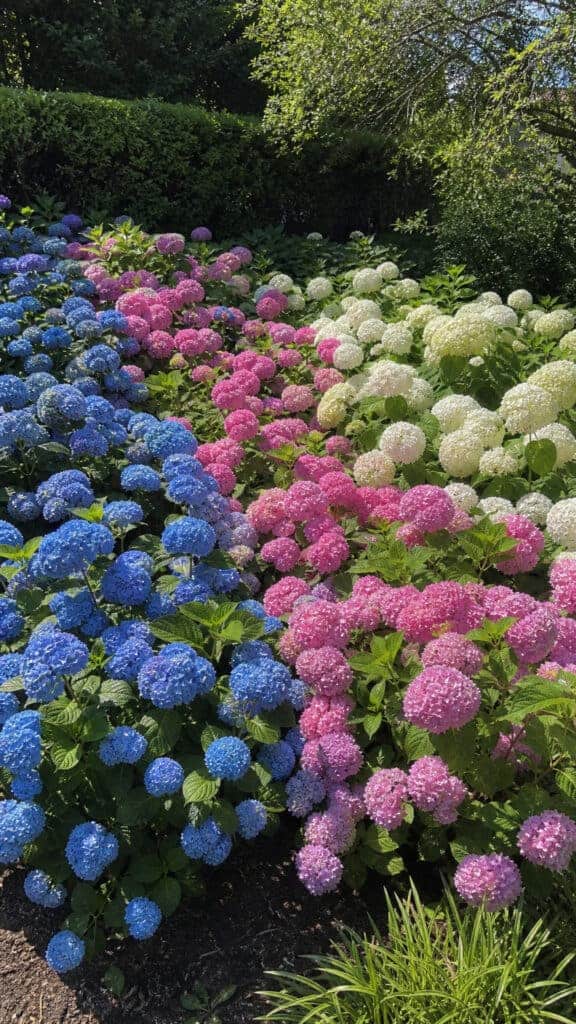

One of my absolute favorite ways to create visual impact is by planting hydrangeas in distinct color blocks! This approach creates such a stunning effect that even my boys noticed when I first did it—and they rarely comment on my gardening projects. The key is choosing three to five hydrangea varieties in complementary colors and grouping them together in generous clusters rather than mixing them randomly throughout the bed.
I love using blue hydrangeas on one side, transitioning to pink in the middle, and finishing with white on the opposite end. This creates a beautiful ombre effect that looks professionally designed but is actually super simple to achieve! Each color block should contain at least three to five plants to make a real statement. The secret is planting them close enough that they’ll eventually grow together into one gorgeous mass of blooms.
For the best results with color-blocking, consider your soil pH from the start. Blue hydrangeas thrive in acidic soil (pH 5.2-5.5), while pink varieties prefer slightly alkaline conditions (pH 6.0-6.2). If you want to maintain distinct color zones in your hydrangea flower bed, you might need to amend different sections of your bed accordingly. I’ve learned to test my soil regularly and add aluminum sulfate for blue zones or lime for pink areas!
Don’t forget about foliage texture when color-blocking! Mixing oakleaf hydrangeas with their distinctive leaf shape alongside traditional mophead varieties adds another layer of visual interest. The varying leaf textures create dimension even when the plants aren’t in full bloom, which is especially important during those in-between seasons.
Cottage Garden Style with Mixed Hydrangeas
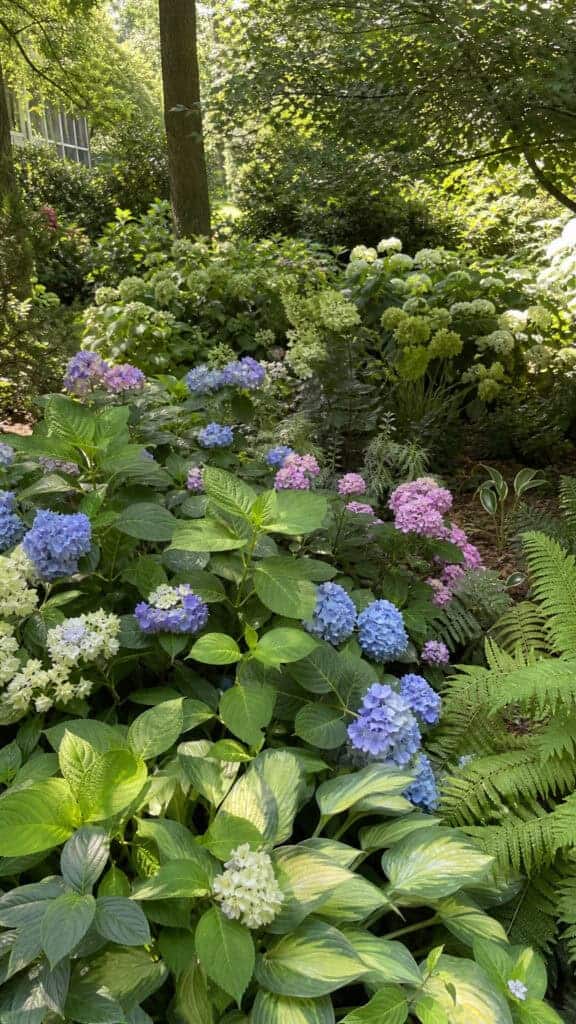
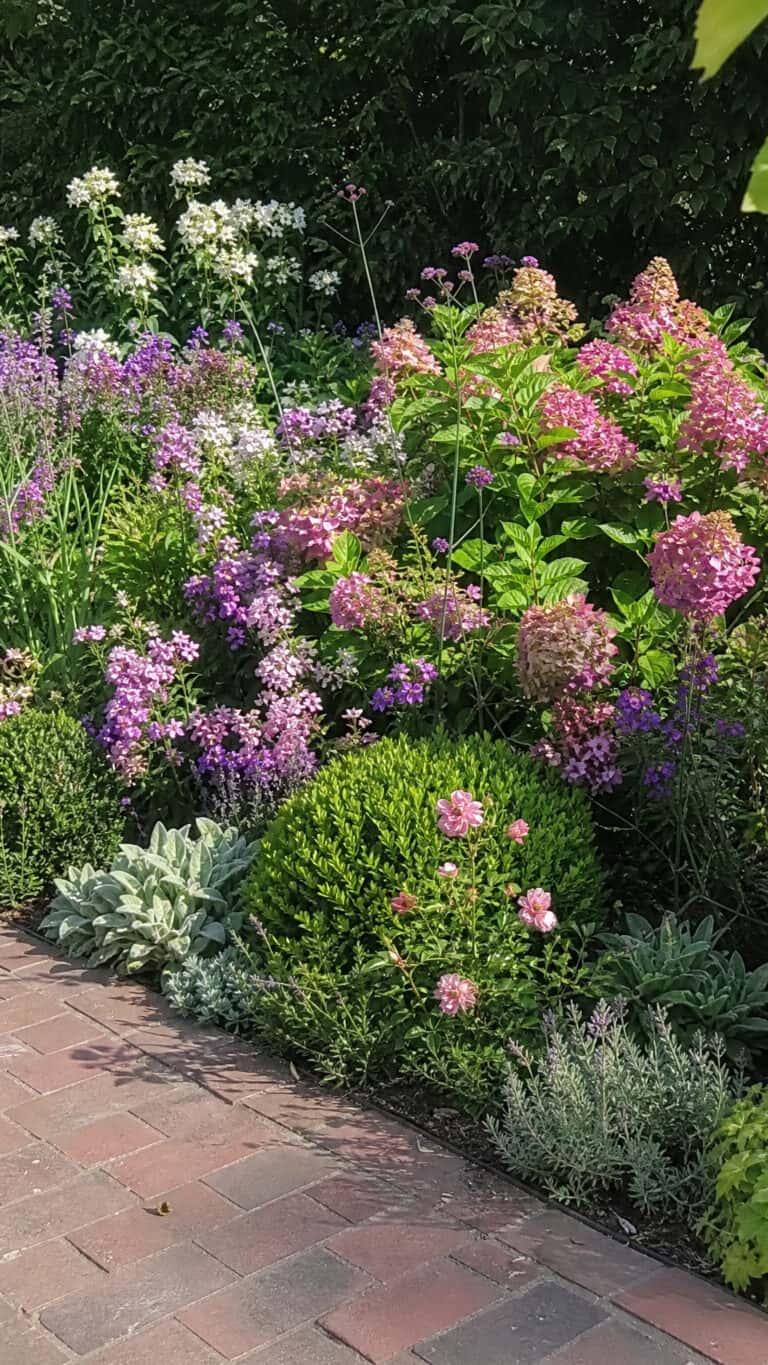
If you’re like me and love that romantic, slightly wild cottage garden look, mixing different hydrangea varieties in a more casual arrangement is absolutely the way to go! This style feels so welcoming and lived-in, which is perfect for a family with kids who actually use the yard. I combine lacecap hydrangeas with mopheads, paniculatas, and oakleaf varieties for a delightfully eclectic mix that blooms at slightly different times throughout the season.
The beauty of a cottage-style hydrangea flower bed is that it looks intentionally informal while still being incredibly beautiful. I plant my hydrangeas in odd-numbered groups (threes and fives work best!) and let them intermingle naturally as they grow. Between the hydrangea clusters, I tuck in complementary perennials like hostas, astilbes, and ferns to fill in gaps and add textural contrast.
One trick I’ve discovered is to include at least one or two panicle hydrangeas (like ‘Limelight’ or ‘Vanilla Strawberry’) in the mix because they bloom later than the traditional varieties. This extends your color show well into fall! Plus, panicle hydrangeas are super hardy and can handle more sun than their bigleaf cousins, giving you more flexibility in your planting design.
For that authentic cottage garden feel, don’t be afraid to let things get a little unruly! I’ve learned to embrace the natural growth habits of different hydrangea varieties rather than trying to force them into perfect shapes. Some gentle pruning is fine, but the slightly overgrown, billowy look is what makes this style so charming and approachable.
Foundation Planting Hydrangea Display
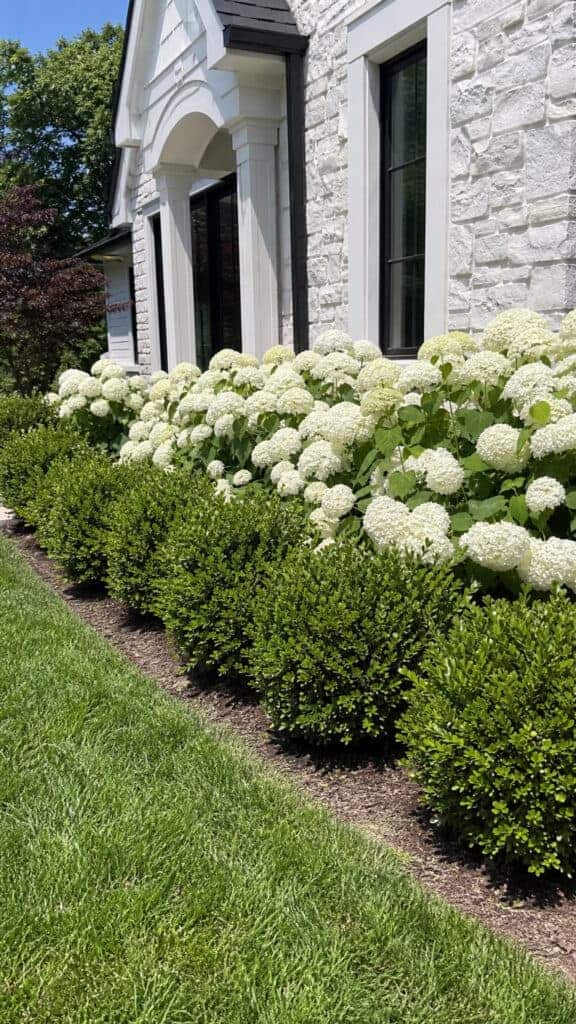
Using hydrangeas as foundation plantings around your house is such a smart way to create curb appeal while softening the transition between your home and yard! I planted a row of ‘Annabelle’ hydrangeas along our front foundation three years ago, and they’ve completely transformed the look of our house. Every summer, neighbors actually stop to take pictures—it’s become a real showpiece!
When designing a foundation hydrangea flower bed, scale is everything! You need to consider the mature size of your chosen varieties and leave adequate space between plants and your home’s siding. I made the mistake initially of planting too close, and let me tell you, trying to paint behind overgrown hydrangeas is no fun at all. Leave at least 3-4 feet between the plants and your house for proper air circulation and maintenance access.
I absolutely love using white hydrangeas for foundation plantings because they complement virtually any house color and look crisp and clean against siding. Varieties like ‘Annabelle’, ‘Incrediball’, or panicle types like ‘Bobo’ (which stays more compact!) are perfect choices. If your house has a shaded north-facing side, bigleaf hydrangeas will thrive there beautifully!
To create year-round interest in your foundation bed, layer your hydrangeas with evergreen shrubs like boxwood or dwarf conifers. I planted boxwood in front of my hydrangeas to provide winter structure when the hydrangeas are dormant. Spring bulbs tucked in between everything provide early season color before the hydrangeas leaf out. It’s like having four gardens in one space!
Shade Garden Hydrangea Sanctuary
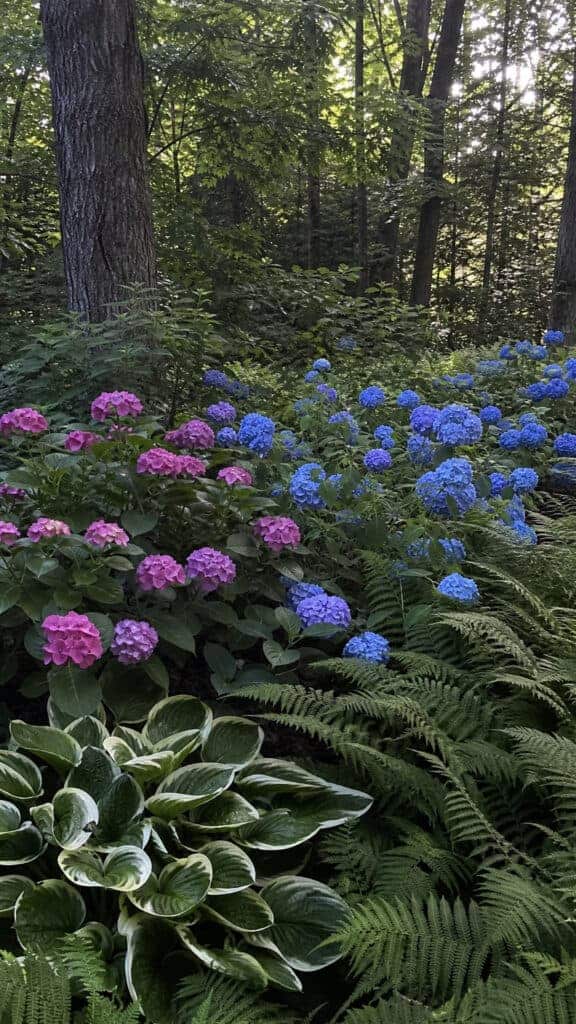
If you have a shady spot in your yard that feels like a gardening challenge, let me tell you—hydrangeas are your answer! I have a heavily shaded area under our oak trees that used to be just bare dirt and moss, but now it’s my favorite peaceful retreat filled with gorgeous hydrangeas. Most hydrangea varieties actually prefer some shade, especially in hot climates, so don’t think of shade as a limitation!
For a shade garden hydrangea flower bed, bigleaf hydrangeas (Hydrangea macrophylla) are your best friends. They absolutely thrive in dappled shade and produce those gorgeous blue and pink blooms we all love! I’ve also had tremendous success with oakleaf hydrangeas in shade—their cone-shaped white flowers are stunning, and the fall foliage color is an added bonus that lights up those darker areas.
The key to success in a shade garden is working with your soil! Shady areas often have dry, compacted soil thanks to tree roots competing for moisture. I amend my shade beds heavily with compost and make sure to water consistently, especially during the first year. Mulching generously (about 3 inches deep) helps retain moisture and keeps those hydrangea roots happy and healthy.
To create a lush, layered look in your shade hydrangea bed, combine your hydrangeas with other shade-loving plants that have interesting foliage. I use hostas, heucheras, and Japanese painted ferns to create a tapestry of textures and colors that looks beautiful even when the hydrangeas aren’t blooming. Impatiens or begonias tucked in the front add pops of continuous color throughout the season!
Border Hedge Hydrangea Flower Bed
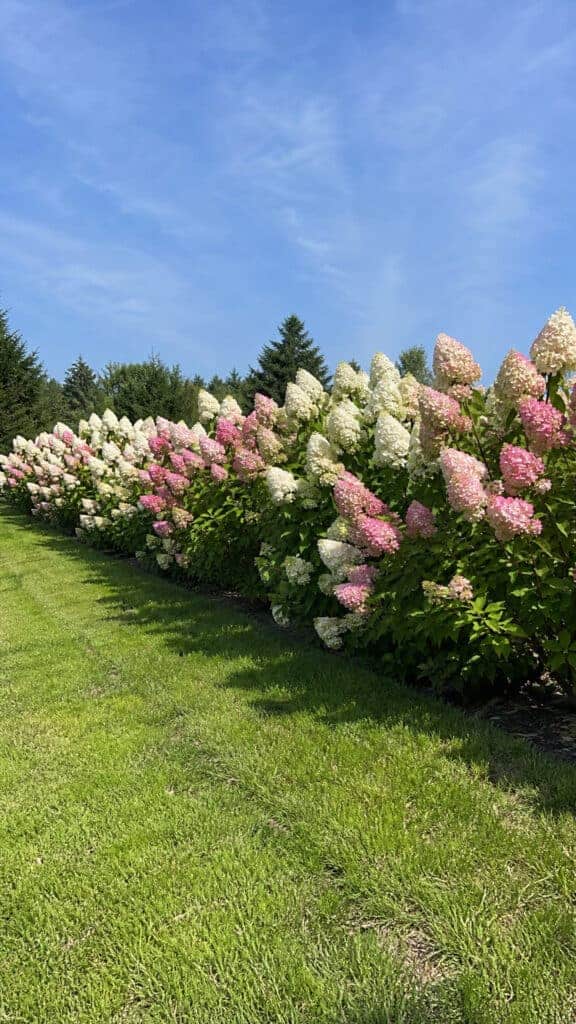
Creating a living fence or border hedge with hydrangeas is such a brilliant way to define spaces in your yard while adding massive amounts of color! I planted a hydrangea hedge along our property line two years ago, and it’s given us privacy from the neighbors while looking absolutely spectacular. It’s so much prettier than a traditional fence, and the boys love having a natural backdrop for their outdoor adventures!
For a successful hedge-style hydrangea flower bed, choose varieties that grow to similar heights and have upright growth habits. Panicle hydrangeas like ‘Limelight’, ‘Little Lime’, or ‘Fire Light’ are perfect for this application because they’re incredibly hardy and maintain a nice shape with minimal pruning. I planted mine about 4-5 feet apart, and they’ve filled in beautifully to create a solid wall of blooms!
The beauty of a hydrangea hedge is that you can make it as formal or informal as you like. For a more structured look, choose all one variety and prune them uniformly each year. I prefer a slightly more relaxed approach, mixing two or three varieties that bloom at different times to extend the color season. ‘Limelight’ starts with lime-green blooms that turn pink in fall, while ‘Fire Light’ opens white and transitions to deep rose—the changing colors keep things interesting!
Don’t forget to consider the backdrop behind your hedge! I planted mine in front of a dark wooden fence, which makes the light-colored blooms really pop. If you’re using your hydrangea hedge as a property border without a fence behind it, consider adding a few evergreen shrubs or ornamental grasses at intervals to provide winter interest when the hydrangeas are dormant.
Container and Raised Bed Hydrangea Garden
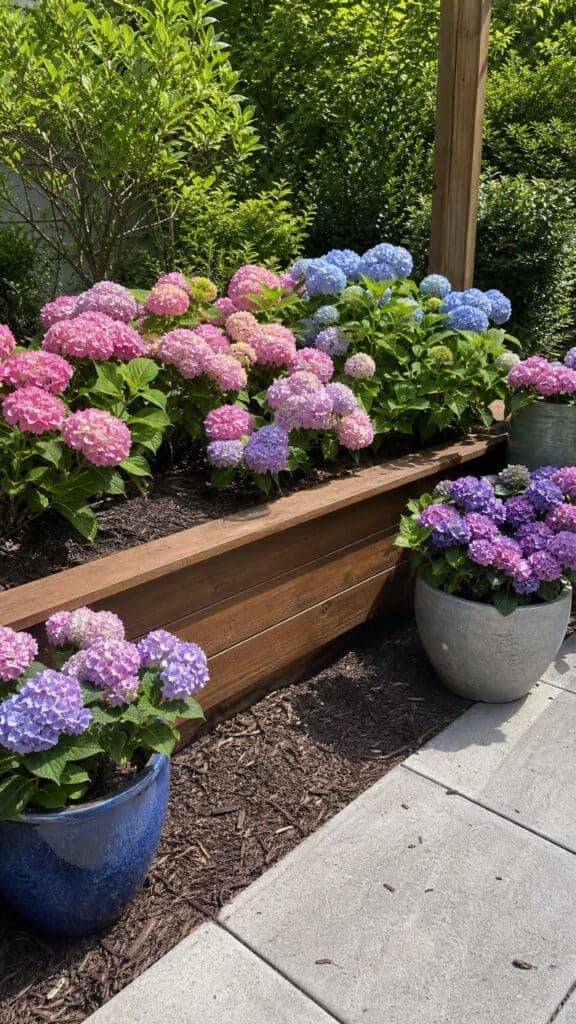
Not everyone has acres of space for elaborate garden beds—I certainly don’t! That’s why I absolutely love incorporating hydrangeas into containers and raised beds. This approach is perfect if you’re dealing with poor soil, limited space, or if you just want the flexibility to rearrange your garden design. Plus, containers allow you to control soil pH more easily, which means you can have blue hydrangeas right next to pink ones without any color-bleeding issues!
When creating a raised bed hydrangea flower bed, size matters! Hydrangeas have substantial root systems, so your raised bed should be at least 18-24 inches deep and wide enough to accommodate mature plant spread. I built a raised bed that’s 4 feet wide by 8 feet long, and it comfortably holds three hydrangeas with room for companion plants. The improved drainage of raised beds is fantastic for hydrangeas, which hate wet feet!
For container growing, choose dwarf varieties specifically bred for pots like ‘Cityline’ series, ‘Little Lime’, or ‘Bobo’. I use containers that are at least 18-20 inches in diameter with excellent drainage holes. The key is using a high-quality potting mix (not garden soil!) and being diligent about watering—containers dry out much faster than in-ground plantings, especially during hot summer days when the boys are running through the sprinkler!
One of my favorite tricks is creating a mobile hydrangea display by grouping several containers of different sizes together! I use a mix of pot heights and styles, planting hydrangeas in the largest containers and surrounding them with smaller pots of complementary annuals. This creates a lush, layered look, and I can easily move everything around if I want to change up the design or make room for the boys’ outdoor activities!
Cutting Garden Hydrangea Flower Bed
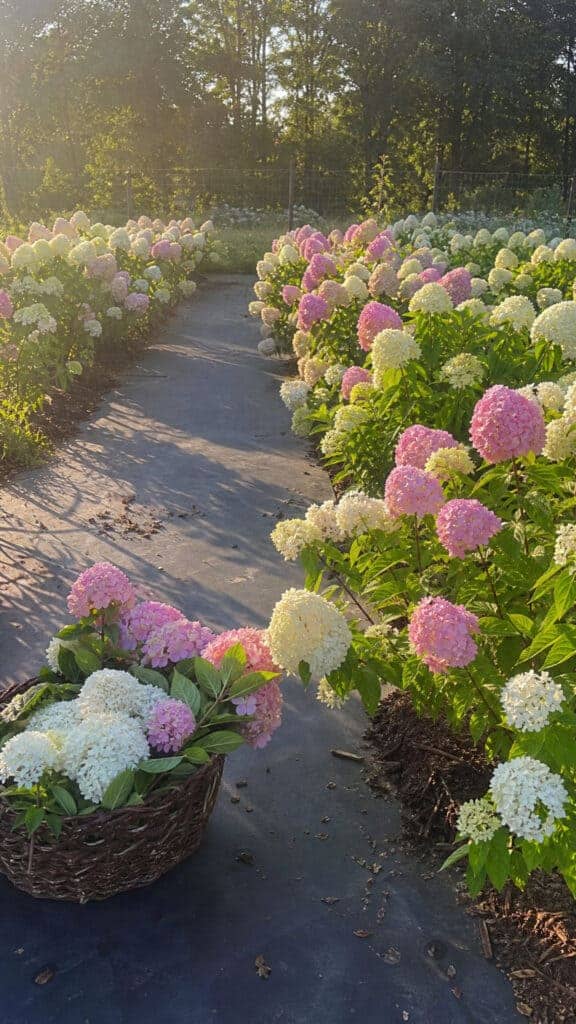
If you love having fresh flowers in your house (and who doesn’t?!), dedicating a hydrangea flower bed specifically for cutting is such a smart idea! I planted a cutting garden in a sunny corner of our yard, and it’s become my favorite place to visit with my morning coffee. Having an abundance of hydrangeas means I can cut armfuls for arrangements without feeling guilty about stripping my display beds bare!
For a cutting garden, I focus on varieties that produce lots of blooms and hold up well in vases. Panicle hydrangeas are absolutely fantastic for cutting—they last for weeks in arrangements and dry beautifully if you want to preserve them. ‘Limelight’, ‘Quick Fire’, and ‘Vanilla Strawberry’ are my top picks! I also include plenty of ‘Annabelle’ hydrangeas because those huge white blooms make such dramatic statements in arrangements.
The layout of a cutting garden can be more utilitarian than ornamental since its primary purpose is production rather than display. I plant my hydrangeas in straight rows with wider spacing (about 5-6 feet apart) to make harvesting easier and to promote better air circulation. This setup also makes it simpler to get in there with the wheelbarrow when I need to add compost or mulch!
To maximize your cutting potential, learn the proper harvesting technique! I cut hydrangea stems in the morning when they’re fully hydrated, choosing blooms that are mature (petals feel papery rather than soft). Immediately plunge the stems into water, and recut them under water before arranging. For the longest vase life, I remove most of the leaves and change the water every couple of days. With proper care, hydrangea arrangements can last two to three weeks—it’s like having a florist in your own backyard!
Creating Your Dream Hydrangea Garden
Designing a hydrangea flower bed that brings joy to your outdoor space doesn’t have to be complicated or intimidating! Whether you’re drawn to the structured elegance of a color-blocked design, the romantic charm of a cottage garden, or the practical beauty of a cutting garden, hydrangeas are forgiving plants that reward even beginner gardeners with spectacular results. I’ve made plenty of mistakes along the way (like that time I planted sun-loving varieties in deep shade—oops!), but that’s all part of the learning process!
The most important thing is to start somewhere and not get too caught up in making everything perfect from day one. My hydrangea beds have evolved significantly over the years as I’ve learned what works in my specific conditions and what my family needs from our outdoor space. So grab some hydrangeas, get your hands dirty, and create a colorful garden display that makes you smile every time you look out the window! Trust me, the beauty and low-maintenance nature of these gorgeous plants will make them a permanent fixture in your gardening plans for years to come!