This post may contain affiliate links. Read the full disclosure here.
Creating a beautiful backyard that feels complete and inviting can seem overwhelming, especially when you’re juggling three little ones who’d rather dig in the dirt than help you plant! But here’s the thing – a flower bed around deck areas is one of the easiest ways to take your outdoor space from “just okay” to absolutely stunning. It softens those hard edges, adds pops of color, and creates that seamless transition between your deck and the rest of your yard that makes everything look intentional and finished!
Whether you’re working with a sprawling deck or a cozy little platform, adding flower beds around the perimeter can completely transform the look and feel of your outdoor living space. I’ve spent countless hours (usually while the boys are napping or playing in the sprinkler!) researching and testing different approaches to deck landscaping, and I’m so excited to share these eight fantastic ideas that’ll help you create that picture-perfect backyard you’ve been dreaming about!
Layered Perennial Border for Year-Round Interest
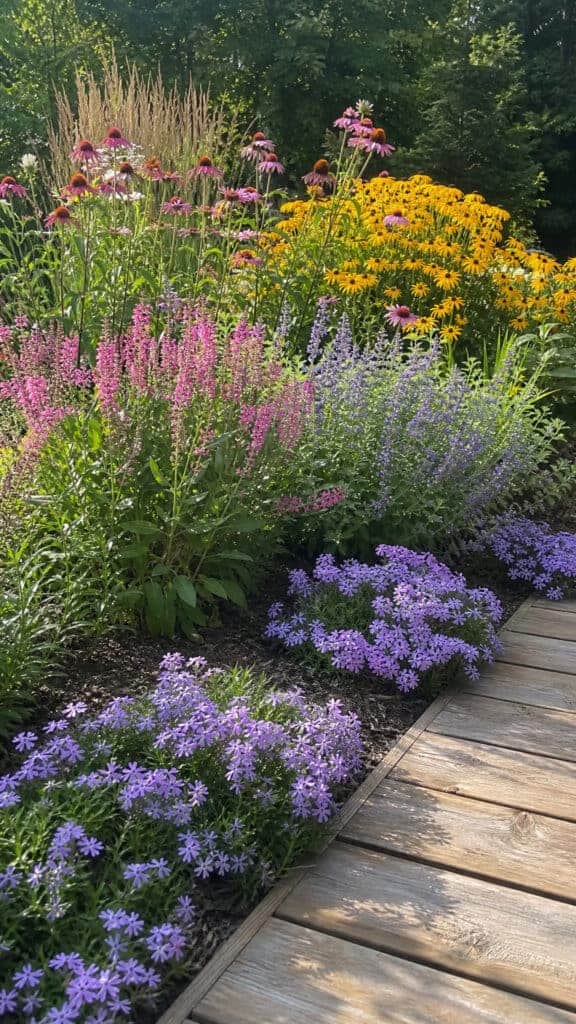

Creating a layered perennial flower bed around deck spaces is honestly one of my favorite approaches because once you get it established, it practically takes care of itself – and with three boys keeping me busy, low maintenance is my love language! The key here is selecting perennials of varying heights that bloom at different times throughout the season, so you always have something gorgeous to look at.
Start with taller plants like black-eyed Susans, coneflowers, or Russian sage at the back of your flower bed (the side farthest from the deck), then work your way down to medium-height beauties like salvia, catmint, or daylilies in the middle layer. Finally, edge everything with low-growing ground covers like creeping phlox, sedum, or sweet alyssum right where the flower bed meets your deck. This creates amazing visual depth and makes your deck look like it’s nestled into a professional landscape!
The beauty of this approach is that perennials come back year after year, so you’re not replanting everything every spring. I love mixing in different foliage textures too – ornamental grasses add movement, hostas bring those gorgeous broad leaves, and ferns create a lush, woodland feel. When you layer everything thoughtfully, your flower bed around deck will look intentionally designed rather than randomly planted!
Pro tip from one busy mom to another: mulch heavily between your perennials! It suppresses weeds (because who has time for constant weeding?), retains moisture, and gives everything a neat, finished appearance. I refresh my mulch every spring, and it makes such a difference in keeping everything looking tidy even when I can’t get out there as often as I’d like!
Cottage Garden Charm with Mixed Flowers
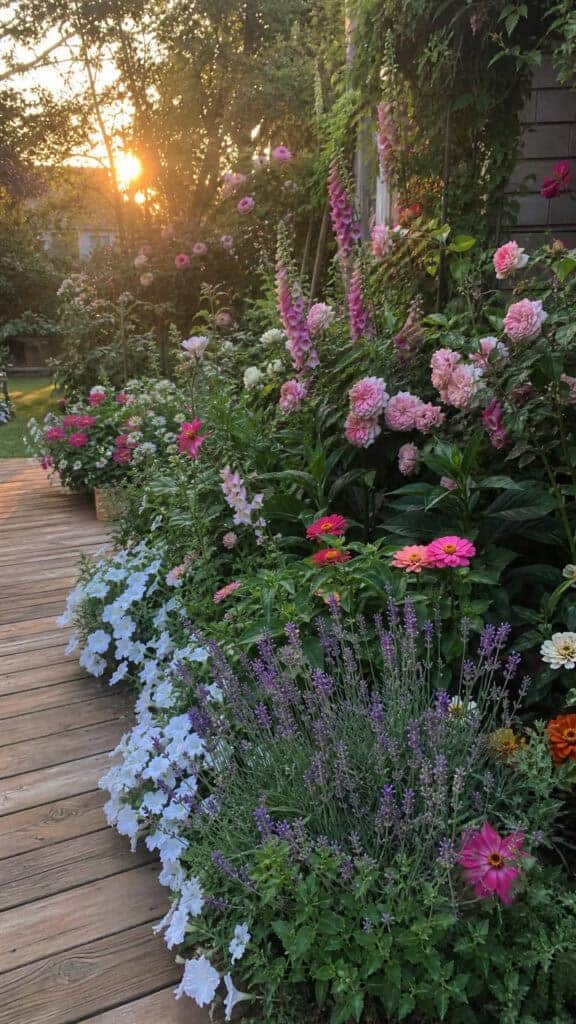
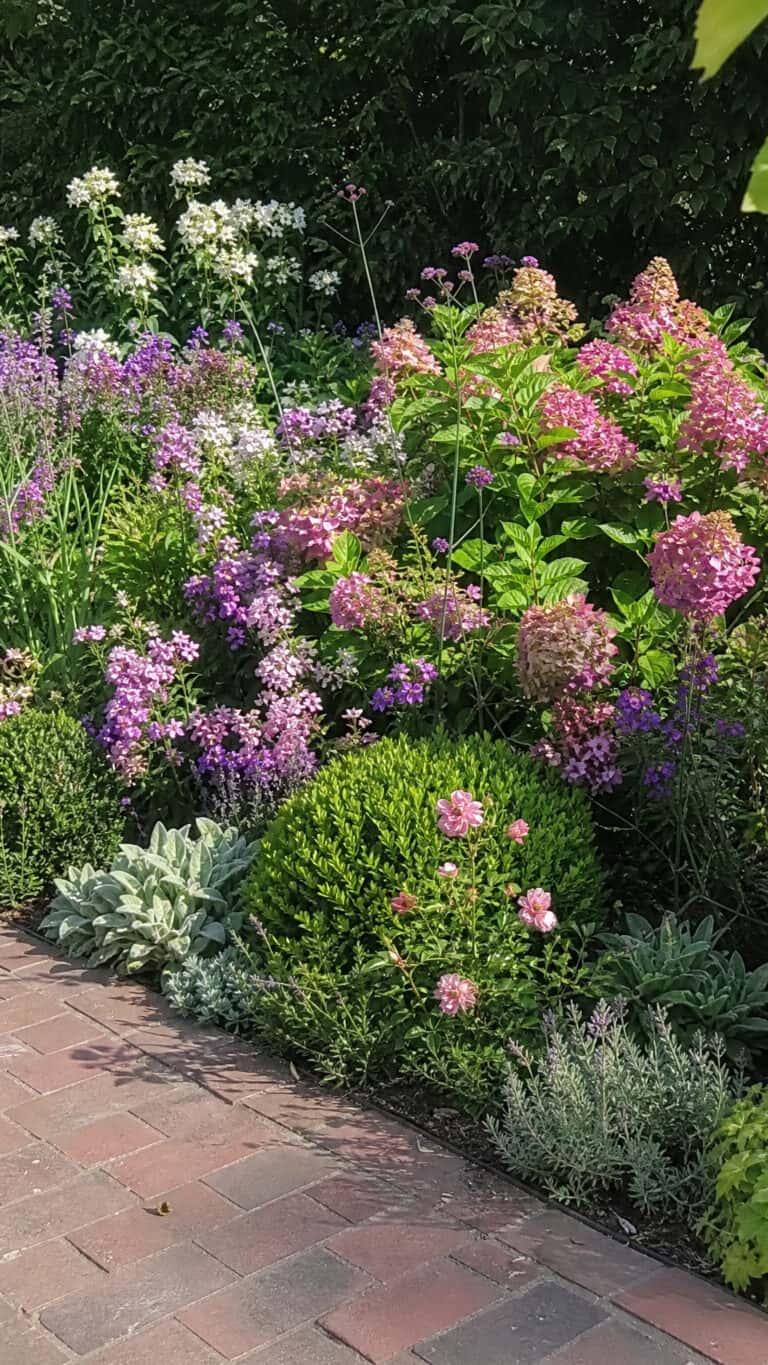
If you love that romantic, overflowing cottage garden look (guilty!), creating a mixed flower bed around deck areas with a variety of annuals and perennials is absolutely magical. This style is all about abundance and cheerful chaos – think lots of colors, textures, and heights all mingling together in a way that feels natural and unstructured, even though there’s definitely some planning involved!
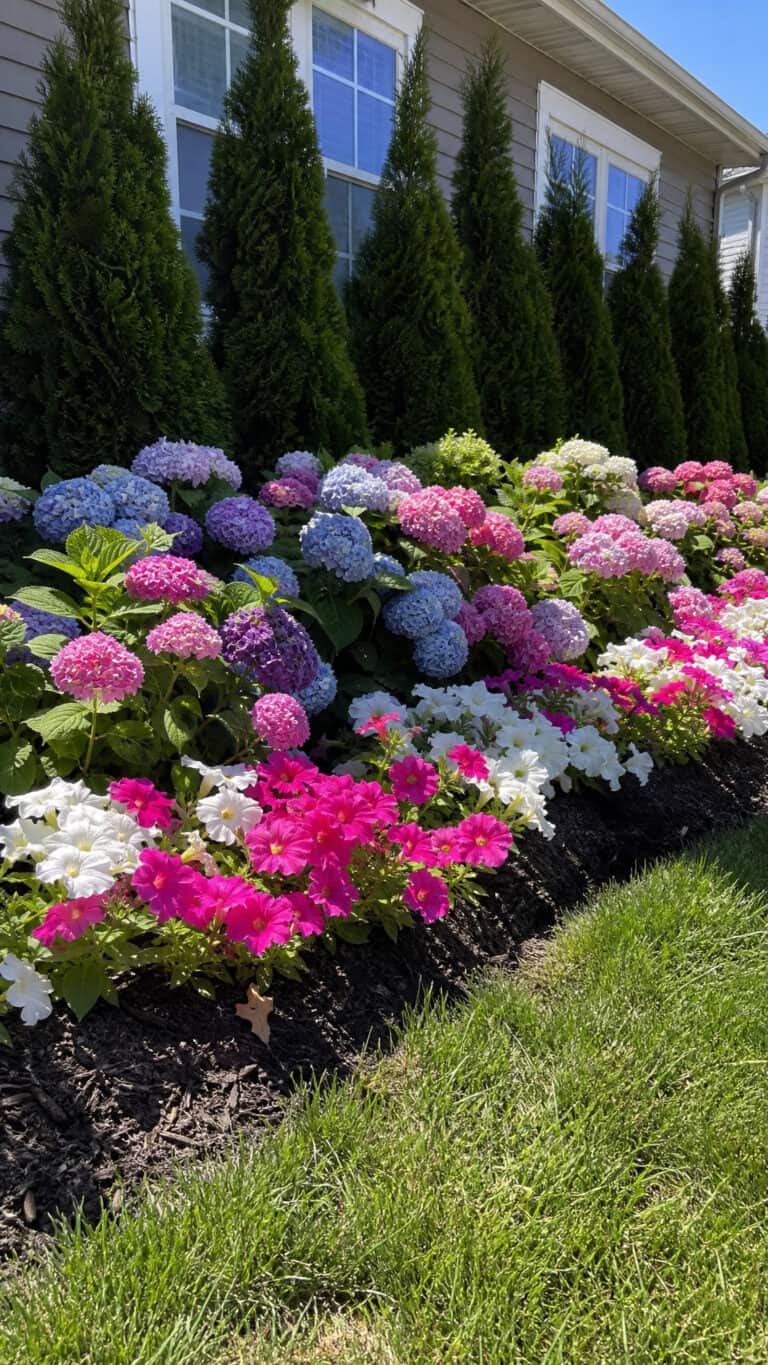
For this approach, I love combining classic cottage garden favorites like roses, lavender, foxgloves, and hollyhocks with cheerful annuals like zinnias, cosmos, and petunias. The perennials provide the structure and come back reliably each year, while the annuals let you change up your color scheme seasonally and fill in any gaps. It’s like having a fresh canvas every year while keeping your favorite permanent pieces!
The trick to making this look work around your deck is to let plants spill and sprawl a bit – cottage gardens are meant to feel abundant and slightly wild! Allow some plants to self-seed (cosmos and zinnias are great at this), let climbing roses or clematis scramble up deck posts if you have them, and don’t worry too much about perfect spacing. The goal is that “picked from an English countryside” vibe that makes your deck feel like it’s part of a secret garden!
I especially love this style because it’s so forgiving – if one plant doesn’t make it or the boys accidentally trample something during an enthusiastic game of tag, you can easily tuck in a replacement and it blends right in. Plus, cottage gardens attract tons of butterflies and bees, which my middle son is absolutely obsessed with watching!
Modern Minimalist with Ornamental Grasses
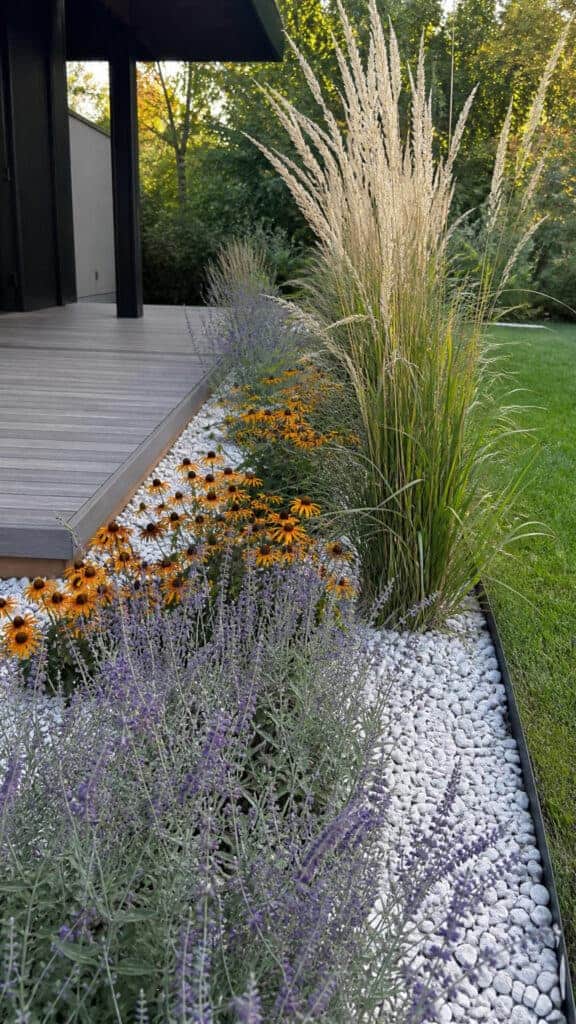
For those of you who lean toward clean lines and contemporary style (or just want something that looks sophisticated without tons of fussy maintenance!), a modern minimalist flower bed around deck can be absolutely stunning. This approach focuses on architectural plants, especially ornamental grasses, combined with a few carefully chosen flowering plants for strategic pops of color.
Ornamental grasses are seriously underrated in my opinion! They add incredible movement and texture, they’re drought-tolerant once established (hello, lower water bills!), and they look amazing from spring through winter. I love using varieties like fountain grass, maiden grass, blue fescue, or feather reed grass as the stars of the show. Their graceful forms and subtle colors create such a sophisticated backdrop for your deck!
Pair your grasses with simple, bold flowering plants in a limited color palette – maybe just white and purple, or coral and yellow. Plants like Russian sage, echinacea, or black-eyed Susans work beautifully in this style. The key is repetition and restraint: plant in groups of three or five of the same variety rather than one of everything. This creates that intentional, designed look that screams “I totally have my life together” (even if we’re all just winging it most days!).
For the finishing touch, use decorative rock or gravel instead of traditional mulch. It reinforces that modern aesthetic and is practically zero-maintenance – no refreshing it every year! I edged mine with simple black steel landscape edging, and it creates such a crisp, clean boundary between the flower bed and deck that I absolutely love. It’s the kind of landscaping that looks expensive but is actually pretty budget-friendly!
Shade-Loving Plants for Covered Deck Areas
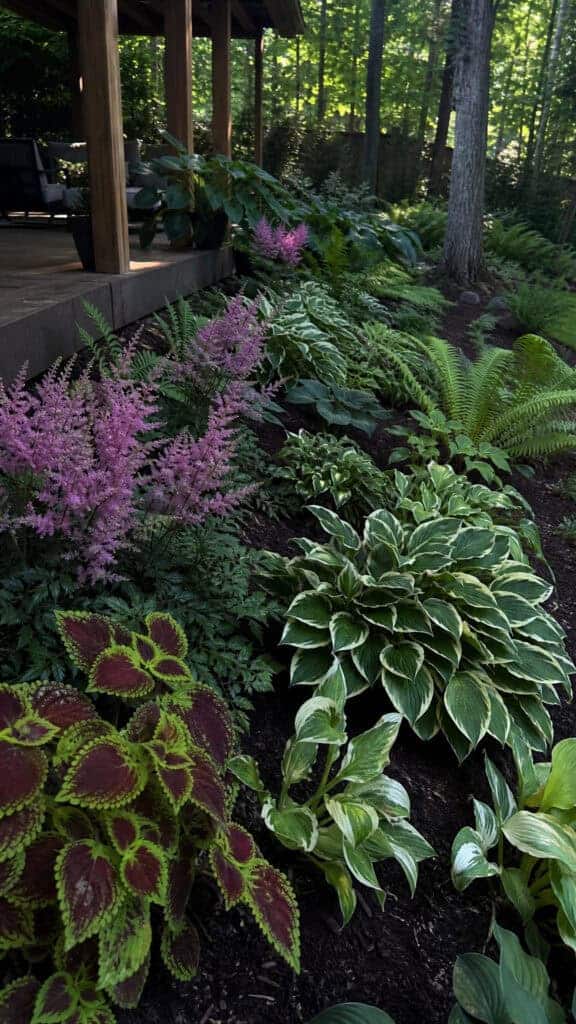
If your deck is partially or fully covered, or if it’s positioned where it blocks sunlight to the surrounding area (which is super common!), don’t worry – you can still create an absolutely gorgeous flower bed around deck spaces with shade-loving plants. I learned this the hard way when I tried planting sun-lovers in the shadowy spots around our deck and watched them struggle. Once I switched to shade plants, everything changed!
Hostas are your best friends in shady spots – they come in so many varieties with different leaf colors, patterns, and sizes that you could honestly create an entire bed with just hostas and it would look amazing! Combine them with astilbes for those gorgeous feathery plumes of pink, red, or white flowers, and add some ferns for extra texture. Bleeding hearts are also stunning in shade and add such a romantic, delicate touch with their heart-shaped flowers!
Don’t forget about shade-loving annuals too! Impatiens, begonias, and coleus can add serious pops of color to brighten up those darker areas. Coleus is especially fun because it’s all about the foliage – incredible patterns and colors that look vibrant even without flowers. I use it to add bright chartreuse, deep burgundy, or hot pink accents that really make the whole bed pop!
One thing I’ve learned is that shade gardens can actually be easier to maintain than sunny ones because the soil doesn’t dry out as quickly. Just make sure you’re amending your soil with plenty of compost or peat moss because shade areas often have tree roots competing for nutrients. And here’s a mom hack: shade gardens tend to have fewer weeds too, because those pesky weeds usually want sun just as much as sun-loving flowers do!
Raised Bed Borders for Elevated Drama
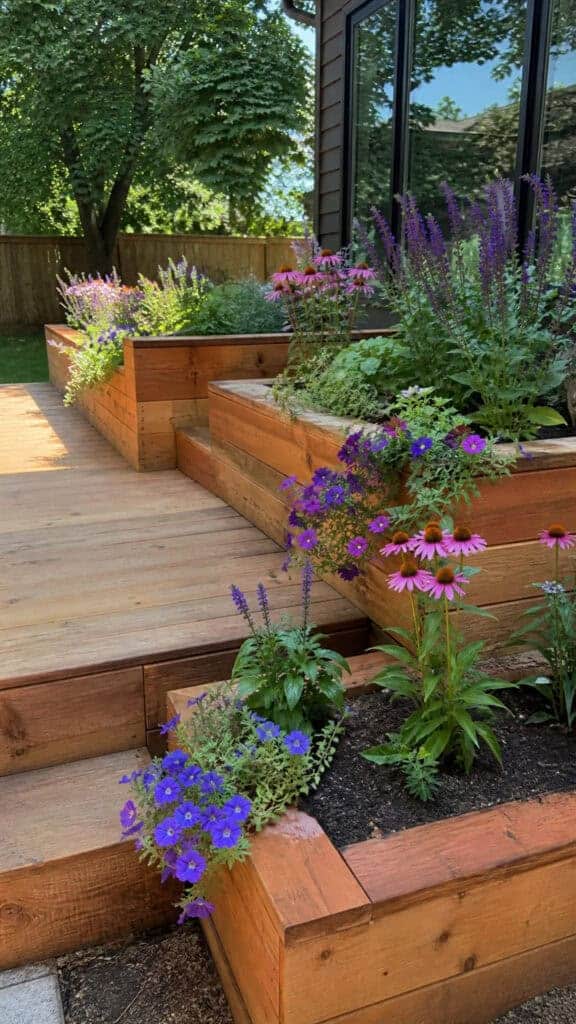
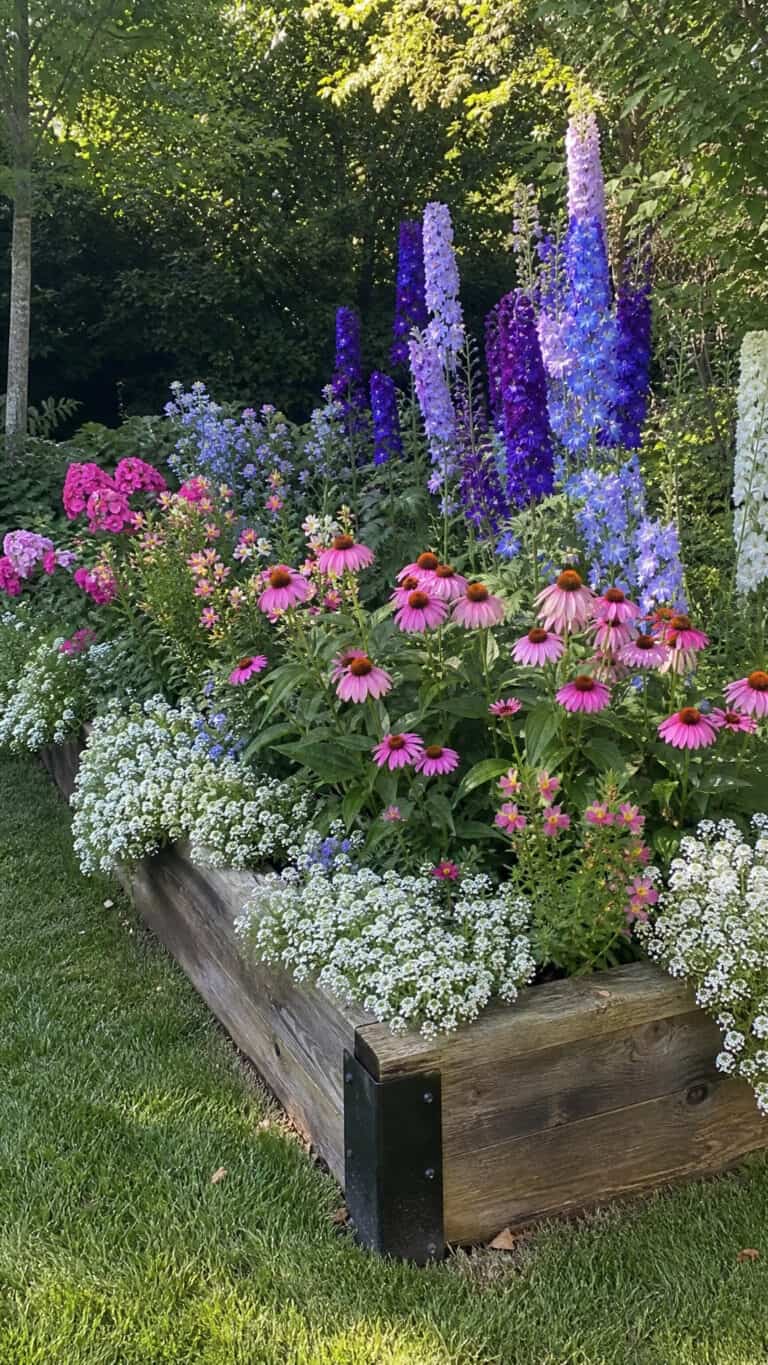
Creating raised flower bed around deck areas is such a game-changer, especially if you’re dealing with uneven terrain or poor soil quality (which seems to be the story of my life!). Raised beds add instant architectural interest, create clear boundaries, and honestly just make everything look more intentional and finished. Plus, they’re easier on your back when you’re planting and maintaining them – a huge bonus when you’re already spending half your day bending down to pick up toys!
You can build raised beds from so many materials depending on your style and budget. Landscape timbers or railroad ties create a rustic look, stacked stone or brick adds classic elegance, and corrugated metal panels give you that trendy modern farmhouse vibe. I went with cedar boards for ours because they’re naturally rot-resistant, relatively affordable, and have that warm, natural look that complements our wooden deck perfectly!
The beauty of raised beds is that you can fill them with exactly the soil your plants need, rather than trying to amend whatever clay or sand you’re working with. I mixed quality garden soil with compost and peat moss, and my plants have absolutely thrived! You can also make raised beds deeper or shallower depending on what you’re planting – go deeper for plants with longer root systems, or keep them shallow for succulents and shallow-rooted flowers.
Design-wise, I love how raised beds create different levels and dimensions around the deck. You can make them all the same height for a uniform look, or vary the heights for more visual interest. Fill them with a mix of trailing plants that spill over the edges (like petunias or sweet potato vine), upright plants for height, and some medium-height fillers. The contained nature of raised beds also makes it easier to keep everything looking neat and prevents plants from spreading where you don’t want them!
Native Plant Garden for Easy Care
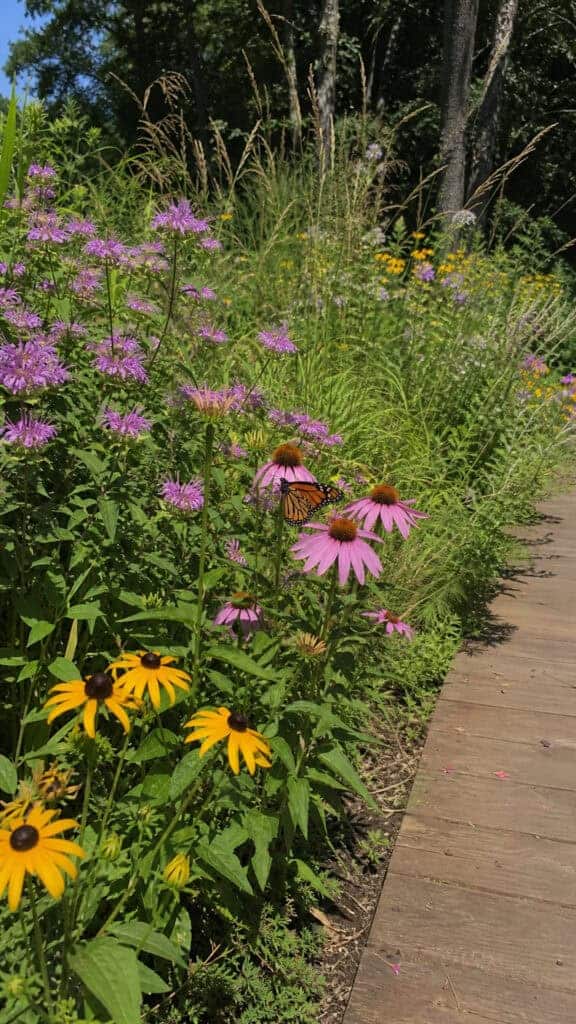
Can we talk about native plants for a minute? Because honestly, once I discovered the magic of using native plants in my flower bed around deck, my gardening life got so much easier! Native plants are adapted to your specific region, which means they’re naturally suited to your climate, soil, and rainfall patterns. Translation: less watering, less fertilizing, less fussing, and more time to actually enjoy your backyard with the kiddos!
Native plants also support local wildlife like butterflies, bees, and birds, which is such a cool bonus. My boys absolutely love watching the monarch butterflies that visit our native milkweed, and we’ve had so many great learning moments about pollinators and ecosystems right in our own backyard. It’s like having a living science lesson just outside the door!
The specific plants you’ll choose depend on your region, but most areas have gorgeous native options. In many parts of the country, you might use purple coneflowers, black-eyed Susans, bee balm, wild bergamot, or native asters. Check with your local extension office or native plant society – they usually have lists of recommended plants and can tell you which ones will thrive in your specific area. I was amazed at how many beautiful native options were available once I started looking!
Design your native flower bed around deck with the same principles as any other garden – vary heights, bloom times, and textures for interest throughout the season. The difference is that once established, native plants are incredibly resilient and low-maintenance. They’ve evolved to handle local pests and diseases, they don’t need fertilizer, and they can typically handle drought conditions. For busy moms who want a beautiful yard without it becoming a part-time job, native plants are seriously the way to go!
Tropical Paradise with Bold Foliage
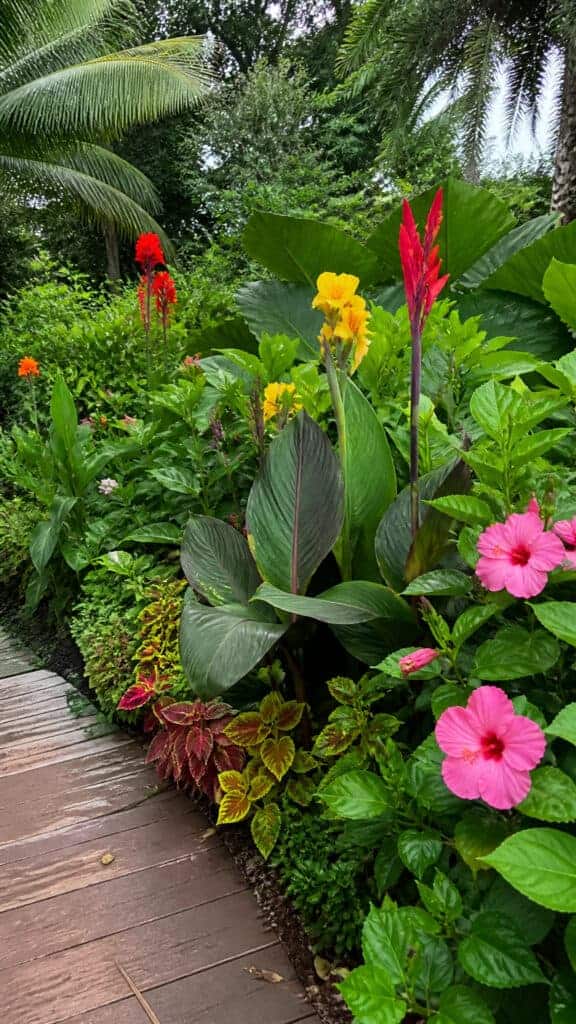
Who says you need to live in the tropics to have a tropical-looking flower bed around deck? Creating a lush, bold, tropical-inspired garden is totally doable in most climates if you choose the right plants – and let me tell you, it makes such a statement! This style is all about big, dramatic leaves and vibrant colors that make your deck feel like it’s part of a resort rather than just your regular backyard.
The stars of a tropical-style bed are plants with large, bold foliage. Cannas are perfect – they have huge paddle-shaped leaves and come in green, bronze, or even striped varieties, plus they produce gorgeous tropical-looking flowers. Elephant ears are another favorite with their enormous heart-shaped leaves that can get ridiculously big (my boys call them dinosaur leaves!). Add some ornamental bananas if you’re feeling adventurous, or use hardy hibiscus for those huge, show-stopping flowers.
For color, go bold! Tropical style is not the place for subtle pastels. Think hot pink, bright orange, deep red, and vibrant yellow. Coleus with wild patterns, brightly colored caladiums, and flowering plants like mandevilla or tropical-looking dahlias all work beautifully. Layer in some interesting textures too – maybe some spiky cordyline or dracaena for contrast against all those broad leaves.
Now, here’s the thing about tropical plants in non-tropical climates: many of them are annuals or need to be brought inside for winter. But honestly, I don’t mind treating them as annuals because they grow so fast and make such an impact during the growing season. If you want to save them, you can dig up the bulbs or rhizomes of plants like cannas and elephant ears in fall and store them inside over winter. Either way, the dramatic, vacation-vibe look you’ll get all summer long is totally worth it!
Herb and Flower Combination for Function and Beauty
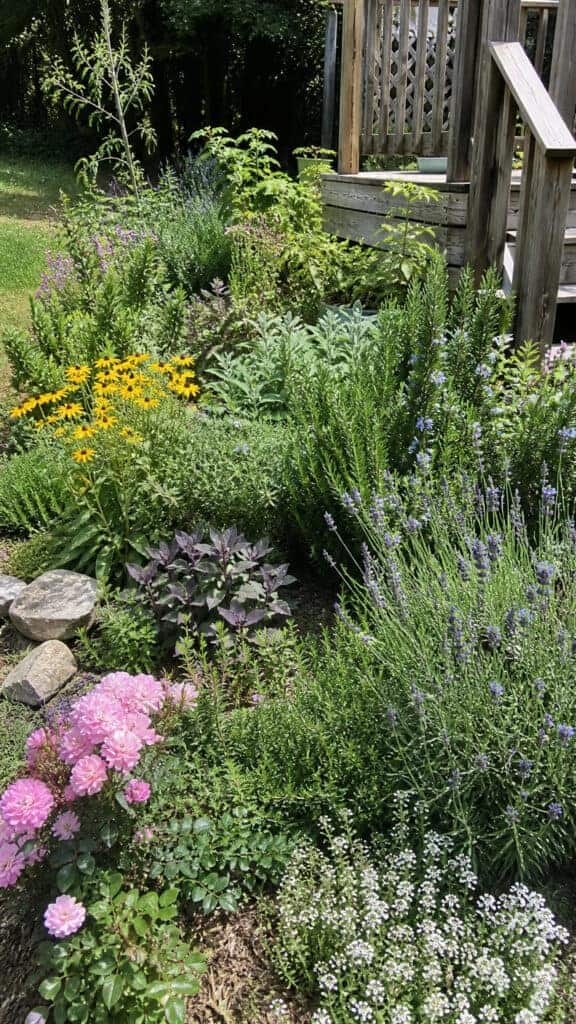
Why choose between beautiful and functional when you can have both? Creating a combination herb and flower bed around deck areas is one of my absolute favorite approaches because it gives you gorgeous blooms plus fresh herbs for cooking – and having herbs right off the deck means I can literally step outside mid-recipe to snip what I need! It’s the kind of practical beauty that makes sense for real life with a busy family.
Many herbs are actually stunning ornamental plants in their own right! Lavender creates gorgeous purple spikes and smells amazing, rosemary has pretty blue flowers and wonderful evergreen foliage, and sage comes in varieties with purple, variegated, or golden leaves that add so much color and texture. Throw in some flowering thyme as a ground cover, some chives with their purple pompom flowers, and maybe some bronze fennel for height and drama, and you’ve got yourself a seriously beautiful bed!
Mix your herbs with complementary flowers that share similar growing conditions. Mediterranean herbs like lavender, rosemary, and thyme love sun and well-drained soil, so pair them with flowers like roses, coneflowers, or salvia. If you’re including herbs that like more moisture like mint or parsley, combine them with hostas, astilbes, or impatiens. The key is matching water and sun requirements so everything thrives together!
I love how this approach makes the garden feel like it has purpose beyond just looking pretty (though it definitely does that too!). The boys think it’s so cool to go pick fresh basil for pizza night or mint for lemonade, and it’s teaching them about where food comes from in such a hands-on way. Plus, herbs tend to be pretty forgiving and many are quite drought-tolerant once established, which fits perfectly with my “beautiful but not too fussy” gardening philosophy!
Bringing It All Together
Creating a beautiful flower bed around deck spaces truly is one of the best investments you can make in your backyard! Whether you go with low-maintenance natives, dramatic tropical plants, functional herbs, or any of the other gorgeous options we’ve explored, the right flower beds will transform your deck from a standalone structure into an integrated part of your landscape that feels complete and intentional. And honestly, there’s something so satisfying about stepping out onto your deck and being surrounded by beautiful plants that you created!
Remember, you don’t have to do everything at once (thank goodness, because who has that kind of time?). Start with one section, see what works, and expand from there. Gardening is all about learning as you go, and even the mistakes teach you something for next season. So grab some plants that make you happy, get those hands dirty, and create the finished backyard look you’ve been dreaming about – you’ve totally got this!